by lspeed | Nov 1, 2026 | WINES: UNCORKING THE MYSTERY
What a Portuguese red wine taught us about tasting and selling the unfamiliar.
Since we launched our Churrasco South American Steakhouse in Phuket in 2012, our wine list at has leaned heavily towards Argentina and Chile, with Spain playing a supporting role. This suited both our steaks and our guests, who were familiar with the names and happily reached for their regular Malbecs or Riojas. So when our supplier suggested adding Portuguese wines during our latest wine list revamp, we were less than enthusiastic.
Beyond Port, which we already carried, and Vinho Verde, Portugal’s lightweight white wine, the country was a blank spot on our wine map. Portugal seemed relevant to our dessert menu, but not as a serious contender alongside our Malbecs or Zinfandels. Our supplier made us taste a few labels (one of the hardships we endure as steakhouse owners), and one particular blind-tasted Douro red caught our attention and affection. It has since become one of our popular all-round reds, leaving us wondering how a region with so much winemaking history had stayed off so many wine lists, including ours.
In the Shadows
The short answer is Port. During the late seventeenth century, Britain wanted alternatives to French wine, a country it was constantly quarrelling with. The sweet character of Port appealed to British tastes, and fortification with grape spirit made the wine more stable during shipping and storage. For a trading nation with a huge navy and merchant marine, that was a considerable advantage. British merchants subsequently helped turn the Douro into Port country, and in 1756 the region was formally demarcated for its production.
For much of the twentieth century, grapes suitable for premium Port were channelled into fortified wine, while dry reds remained commercially invisible. Ferreira’s pioneering Barca Velha demonstrated their potential as early as 1952, but broader change only gathered momentum after Portugal joined the European Community in 1986.
Producers such as Niepoort, Quinta do Crasto, Quinta do Vale Meão and Wine & Soul developed a distinctive dry-wine identity around indigenous varieties including Touriga Nacional, Touriga Franca and Tinta Roriz. Meanwhile, Portugal’s international image remained dominated by Port and Vinho Verde, leaving its dry reds struggling for recognition. The wines had established their quality credentials, but their international reputation has yet to catch up. For operators like us, that gap is where things get interesting.
The Value Case
Few guests have a reference price for Douro wines in their heads. This allows us to offer a red with genuine structure and complexity at a price below that of many comparable French or Italian bottles. In Thailand, where import duties make almost any bottle look expensive, that matters. It’s the same logic we apply to our Wagyu and Black Angus beef – quality at a price that encourages guests to order rather than admire and pass over.
It also gives our regulars something new to explore, without moving into another price bracket. I wouldn’t count on this value gap lasting forever. The Douro’s steep terraces, labour-intensive cultivation and rising production costs are putting pressure on growers. And greater international recognition rarely comes without higher prices.
The Trade-Off
Selling wine from an unfamiliar region means the wine list cannot do all the work. A Malbec or Rioja needs little introduction, but a Douro red needs someone mentioning it at the table. That puts responsibility on our floor team, because a server who cannot explain an unfamiliar wine is unlikely to sell many bottles of it.
What worked for us was positioning the Douro against wines our guests already knew – a fresh alternative for Malbec drinkers, and a natural partner for our steaks. Our Portuguese wine experiment has exceeded our expectations, not because we launched an elaborate sales campaign, but because the wine is excellent, filled a gap in our selection and earned the confidence of our team.
Most guests who order it still know nothing about British Port merchants or Barca Velha, and that’s fine. What matters is that they enjoy the wine, appreciate the recommendation and are happy to come back for another bottle.
And they don’t flinch when the bill arrives.
Image Credit: https://commons.wikimedia.org/w/index.php?curid=35076867
_ _ _
© CHURRASCO PHUKET STEAKHOUSE / ALL RIGHTS RESERVED
Reprinting, reposting & sharing allowed, in exchange for a backlink and credits
Churrasco Phuket Steakhouse serves affordable Wagyu and Black Angus steaks and burgers. We are open daily from 12noon to 11pm at Jungceylon Shopping Center in Patong / Phuket.
We are family-friendly and offer free parking and Wi-Fi for guests. See our menus, reserve your table, find our location, and check all guest reviews here:
https://ChurrascoPhuket.com/
#Churrascophuket #jungceylon #phuketsteakhouse #affordablewagyu #wagyu
by lspeed | Sep 20, 2026 | WINES: UNCORKING THE MYSTERY
Let me start by saying that I’m not at all a Champagne guy. I spent more than enough years in the luxury industry, getting the stuff handed to me at every product launch, gala, or mildly successful watch exhibition. It stopped tasting like celebration to me over time, but hospitality cannot function without it. Take Champagne away from galas and openings, and events turn into just a bunch of people standing around awkwardly, holding canapés and looking for the exit.
So, even as a sceptic, I have developed opinions. They are less about taste, or the provenance of one Maison or another, than about glassware. At the risk of sacrilege, I think almost everyone is drinking Champagne from the wrong type of glass, but with valid reasons. In my defense, iconic houses such as Krug have been making the same argument for years. I am in good company.
Start with the Champagne Flute, that tall, narrow, look-at-me-and-my-bubbles glass. It is elegant, photogenic and the default at every event with a dress code. It is also something of a scam. The shape does a splendid job of preserving and displaying the bubbles, but a less impressive one of letting you smell what you are drinking. There is little room for the aromas to develop. The brioche, nuts, citrus and that overused minerality thing wine people like to go on about are all there, but struggling to get a word in. The flute is not really built for tasting, but for looking good, which explains its enduring success.
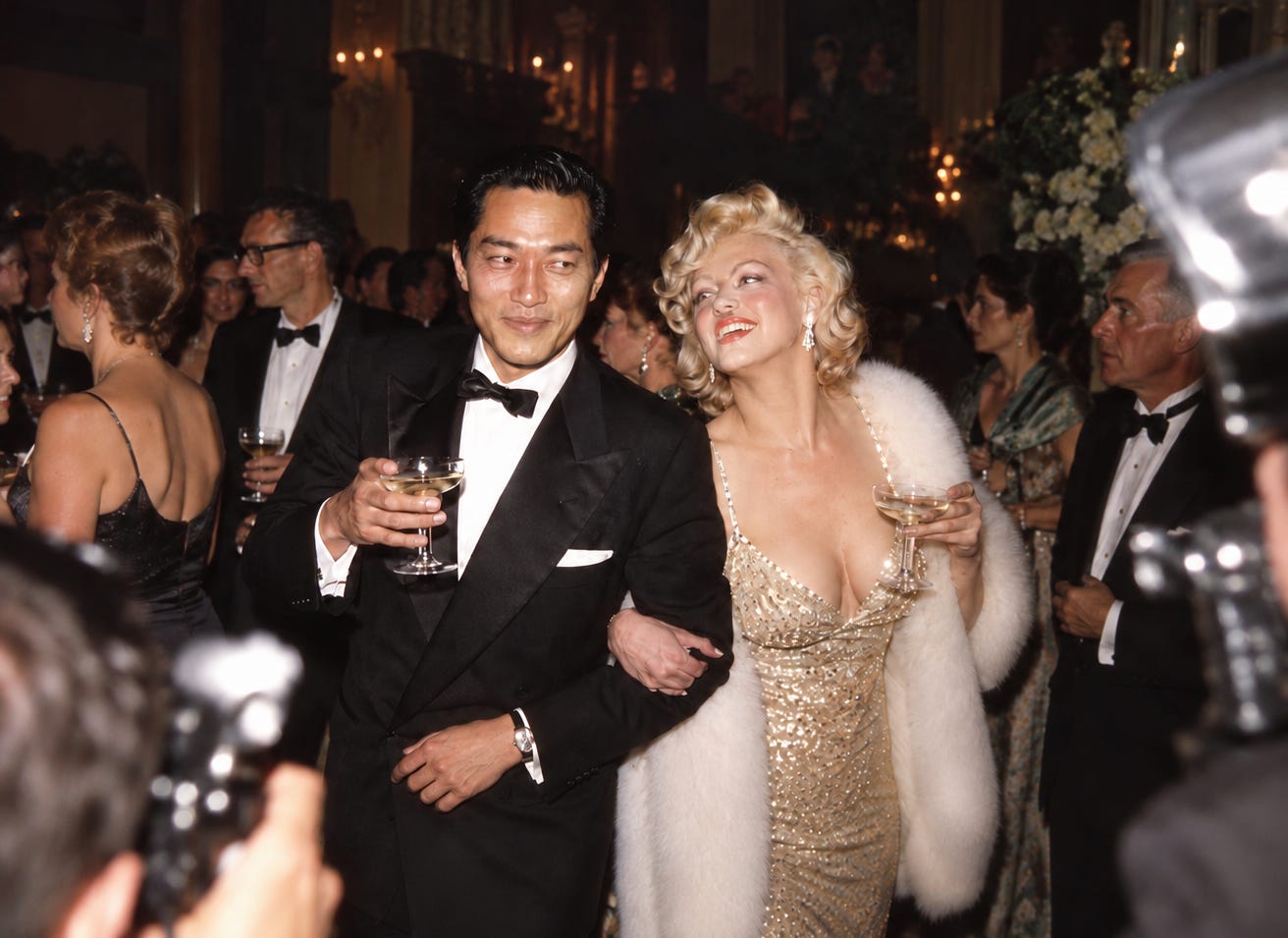
Then there is the Champagne Coupe, the shallow, wide glass seen in every film that involves Gatsby, moody leading ladies in long dresses, or someone making regrettable decisions after midnight. Legend has it that its shape was modelled on Marie Antoinette’s breast, which it wasn’t, of course. But that story has proved considerably more durable than bubbles poured into it.
Called the Sektschale in Germany, the coupe remains the go-to vessel for the country’s sparkling wines. It is not an improvement on the flute, but arguably a worse choice. Its open surface allows bubbles to disappear quickly, so the sparkling part of the experience begins fading as soon as it is poured. It also spills the drink onto your tuxedo if you look the wrong way for a moment, and I’m speaking from experience here. The coupe is gorgeous but largely useless, rather like a supercar without trunk space.
So what actually works?
A plain white-wine glass, like the type you already own. Preferably a tulip-shaped one, with a wider bowl that narrows towards the top. It gives the wine room to breathe and the aromas somewhere to unfold before they reach your nose. You can swirl and sniff it as you would a Chablis or any other serious white wine. This is not as revolutionary a position as it sounds, and a growing number of sommeliers and Champagne houses start recommending much the same thing.
As always, there is a trade-off, as the bubbles will not last quite as long as they do in a flute. And some of that “look at these gorgeous bubbles, daaaaahling” theatre is lost. But if you actually want to taste the thing you probably paid too much for, the choice is easier than convention suggests.
Before reaching for a glass then, consider what you are trying to achieve. If you are toasting an engagement, take the flute. Nobody will be analysing tasting notes at that moment. If you want 1920s glamour and have less concern if the wine survives beyond minute three, take the coupe and get the cameras ready. But if you opened a serious vintage, or merely a bottle good enough to deserve some attention, reach for a tulip-shaped wine glass.
The three glasses are not competitors, but tools for different jobs. And Champagne, the hospitality industry’s perennial overachiever, has found a use for all three.
It’s complicated, darling. But then, so is the bubbly industry itself.
Image Credit: https://www.churrascophuket.com (AI Generated)
_ _ _
© CHURRASCO PHUKET STEAKHOUSE / ALL RIGHTS RESERVED
Reprinting, reposting & sharing allowed, in exchange for a backlink and credits
Churrasco Phuket Steakhouse serves affordable Wagyu and Black Angus steaks and burgers. We are open daily from 12noon to 11pm at Jungceylon Shopping Center in Patong / Phuket.
We are family-friendly and offer free parking and Wi-Fi for guests. See our menus, reserve your table, find our location, and check all guest reviews here:
https://ChurrascoPhuket.com/
#Churrascophuket #jungceylon #phuketsteakhouse #affordablewagyu #wagyu

by lspeed | Sep 6, 2026 | WINES: UNCORKING THE MYSTERY
I did a double take too when I heard this news. And no, it’s not about Mead, the stuff that grumpy giants with horned helmets made from fermented honey to fire up their hump fests en route to Valhalla. Another immediate association was that they must be talking about Ice Wine, and understandably so. Cold country, grapes, and harsh winters surely meant that these Swedes simply waited until everything froze over and then called it a great vintage.
But Swedish wine’s new trick is almost the opposite. The country’s emerging stars are mostly serious dry white wines, made from grapes that producers would prefer not to find frozen solid. More alarmingly for the French and Italians, some of these new labels are apparently becoming quite good. For now though, the established wine kings can relax, as there are no Swedish reds in the pipeline. Oenology, grape hybrids, and nature can only be pushed so far.
In essence, the whole thing is a reversal of centuries of Scandinavia’s relationship with wine. For most of it, Vikings sailed south, pillaging as they did, including vineyards, then decided to carry the stuff home to warm up during their brutal winters. This bitter northern cold has gone from being the defining feature of impossible winemaking to something their winemakers have had to learn to work around. The ambition is no longer to make a delicious dessert wine because winter arrived. Instead, it is to make a bottle good enough to beat established European wines before frost gets anywhere near their vineyards.
Swedish commercial wine is remarkably young. The EU approved Sweden and Denmark for commercial production only in 1999. Today Sweden has around 50 commercial wineries, a microscopic number when compared to France, Italy, or Spain. But large enough to establish that this is far more than a boatload of Vikings stomping on grapes in a shed. In the process, Sweden’s southern Skåne region has even acquired the very optimistic nickname of “Nordic Tuscany,” with its rolling fields, ambitious restaurants, and professionally run vineyards. The cypresses and Chianti bottles are missing, but the comparison no longer sounds ridiculous.
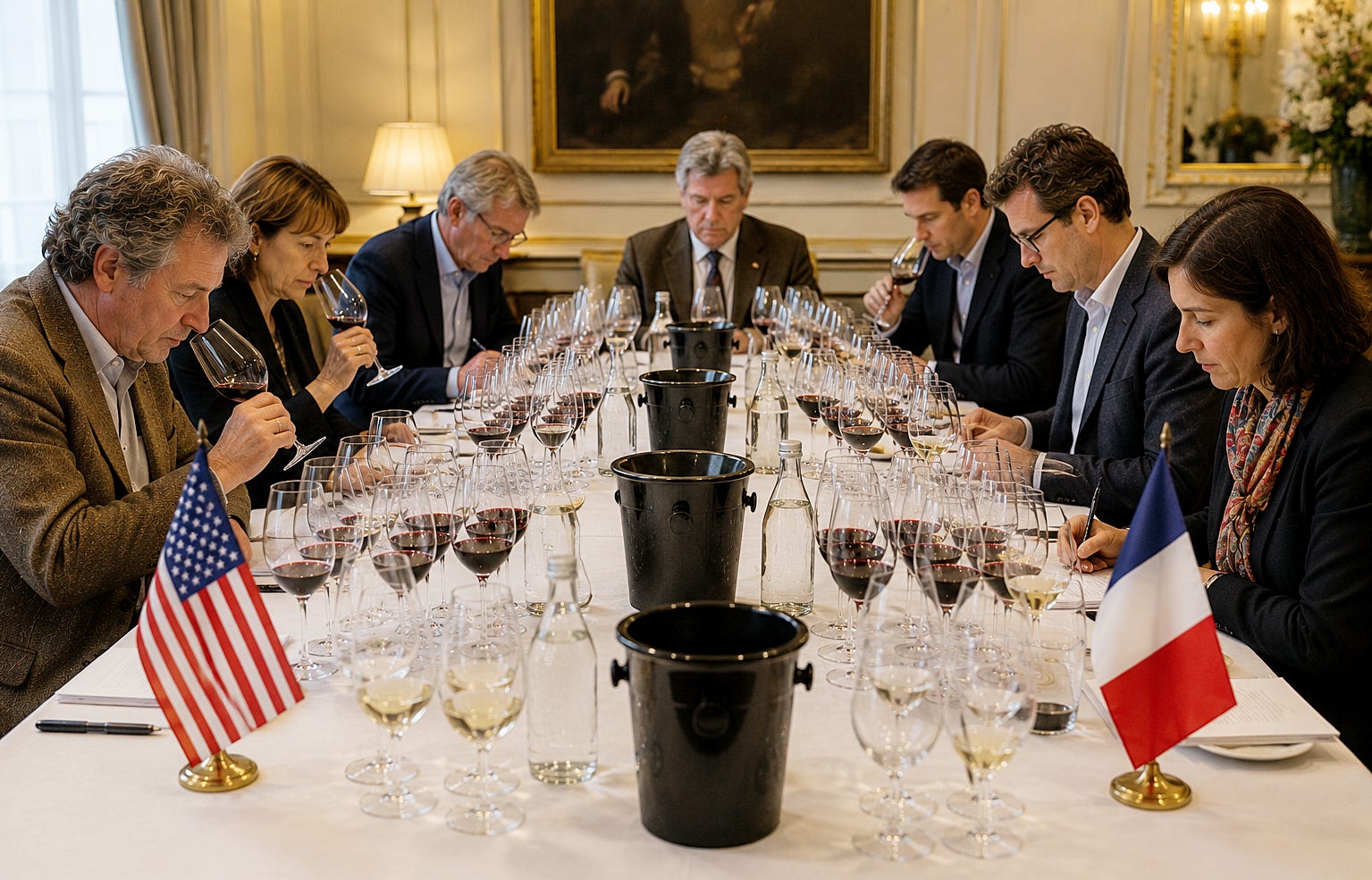
That breakthrough came spectacularly in August 2024 at The Swedish Wine Tasting, a nod to the legendary Judgment of Paris (spelling intentional, look it up). Twelve Swedish wines were put up blind against twelve European counterparts before an eighteen-strong international jury. Immelen 2021 from Kullabergs finished first, ahead of Louis Jadot’s Pouilly-Fuissé 2022, and was subsequently served up at a Nobel Prize winners’ banquet. This is about as close as a bottle can get to receiving a medal itself.
The interesting question for oenologists is why Swedish wine works at all. Climate change is a reason, but not the whole story. Southern Sweden is indeed warmer than it once was, extending the possibilities for viticulture. Yet warmer does not mean easier — growing seasons become less predictable, with frost, rain and temperature swings capable of ruining even a hardened Viking’s spirit.
But Sweden does possess one unusual advantage, extraordinarily long summer days. Grapes receive abundant light while temperatures remain relatively cool, allowing them to ripen slowly while retaining acidity. That combination is precisely what many warmer wine regions often struggle to achieve. The grape varieties are different too. Forget Cabernet Sauvignon sunbathing beside a Swedish farmhouse. The star is Solaris, a cold-resistant variety developed in Germany in the 1970s, with Riesling and Pinot Gris among its ancestry. Kullabergs’ Immelen combines Solaris with Souvignier Gris and Muscaris, producing something much more substantial than the thin, aggressively acidic northern wine one might expect.
Even Sweden’s famously restrictive alcohol system has helped. Systembolaget, the state retail monopoly, makes life difficult for small wineries but also forces producers seeking national distribution to demonstrate consistency and quality. In effect, this is a quality control mechanism, which has served the industry well.
Sweden’s wineries are not challenging the big established players. Their opportunity lies in being small, distinctive and improbable. No ice required.
Image Credit: https://www.churrascophuket.com (AI Generated)
_ _ _
© CHURRASCO PHUKET STEAKHOUSE / ALL RIGHTS RESERVED
Reprinting, reposting & sharing allowed, in exchange for a backlink and credits
Churrasco Phuket Steakhouse serves affordable Wagyu and Black Angus steaks and burgers. We are open daily from 12noon to 11pm at Jungceylon Shopping Center in Patong / Phuket.
We are family-friendly and offer free parking and Wi-Fi for guests. See our menus, reserve your table, find our location, and check all guest reviews here:
https://ChurrascoPhuket.com/
#Churrascophuket #jungceylon #phuketsteakhouse #affordablewagyu #wagyu

by lspeed | Jul 5, 2026 | WINES: UNCORKING THE MYSTERY
For as long as we humans have fermented grapes into wine, it has appeared wherever romance is expected. Candlelit dinners, first dates, anniversaries, proposals – someone almost always seems to pop a cork or reach for a wine list. Some of us tend to blame Hollywood for this enduring partnership, but science suggests there may be ever so slightly more to the story.
Now, before I start prescribing Cabernet instead of couples therapy here, it is worth pointing out that wine is not a miracle potion. It is, however, a remarkably effective social lubricant – pun entirely intended. It lowers defences, relaxes conversation, and occasionally convinces otherwise sensible adults that humming shmaltzy ballads in public is an excellent idea.
Researchers in Italy (where else) have found and proclaimed that small amounts of alcohol stimulate the hypothalamus, that wonderfully primitive part of our brain responsible for regulating hunger, body temperature, hormones – and sexual desire. It explains why one well-poured glass can leave people feeling simultaneously warmer, hungrier and more charming than they are.
The important phrase here is one well-poured glass, as beyond moderation, biology begins sending invoices. Confidence gives way to clumsiness, wit becomes lame repetition, and romance develops the aerodynamic grace of a suitcase with one defective wheel.
THEN THERE IS SMELL
Wine enthusiasts spend their lives discussing aromas of cherries, cedar, forest floor, vanilla and baking spices. As it turns out, these aren’t merely conversation starters designed to intimidate newcomers at tastings. Human attraction is deeply connected to our sense of smell.
More studies suggest that women may respond positively to earthy, musky, woody and cherry aromas. Men, on the other hand, appear more receptive to scents like vanilla, butter, caramel, citrus and gentle spices. Coincidentally and conveniently, many premium wines display exactly these aromatic characteristics. Suddenly that glass of a mature Amarone or a beautifully aged Champagne becomes the cause of a much busier social calendar than otherwise.
THE ROLE OF MEMORY
Our brains store scent more powerfully than almost any other sensation. A particular perfume can transport someone back twenty years, and wine behaves much the same way. If a memorable evening included an amazing Pouilly-Fumé or an elegant Pinot Noir, your brain may quietly connect those aromas with pleasure long after you’ve forgotten the playlist or the conversation. The nose keeps better records than the diary.
Scientists have also investigated naturally occurring compounds such as phenylethylamine, also known as the “love chemical”, which appears in tiny amounts in both wine and chocolate. While the concentrations are far too small to qualify as Cupid in liquid form, they certainly contribute to wine’s long-standing romantic reputation.
THE CONTEXT OF CHEMISTRY
A beautifully set table, soft lighting, a gently flickering scented candle, good food and uninterrupted conversation have rescued far more evenings than any grape variety ever has. Wine happens to be exceptionally good at joining the party without demanding centre stage, and that is wine’s greatest talent. It rarely creates romance from nothing, but it can help amplify what is already there. It slows the pace, encourages conversation and reminds us that life’s finest pleasures are usually experienced with all five senses switched firmly on.
So the next time someone describes a wine as seductive, they are not speaking entirely in metaphor. Just remember that the magic rarely lives inside the bottle alone. The real chemistry is usually sitting smiling across the table.
Image Credit: https://www.churrascophuket.com (AI Generated)
_ _ _
© CHURRASCO PHUKET STEAKHOUSE / ALL RIGHTS RESERVED
Reprinting, reposting & sharing allowed, in exchange for a backlink and credits
Churrasco Phuket Steakhouse serves affordable Wagyu and Black Angus steaks and burgers. We are open daily from 12noon to 11pm at Jungceylon Shopping Center in Patong / Phuket.
We are family-friendly and offer free parking and Wi-Fi for guests. See our menus, reserve your table, find our location, and check all guest reviews here:
https://ChurrascoPhuket.com/
#Churrascophuket #jungceylon #phuketsteakhouse #affordablewagyu #wagyu
by lspeed | Jun 28, 2026 | WINES: UNCORKING THE MYSTERY
My first brush with what are known as “New World wines” came during a trip to a convention in Australia in the early 1980s. I was travelling with several fellow wine enthusiasts, and that meant finding local wines became as important as attending the event itself.
Australia wasn’t yet the wine powerhouse we know today, so we approached these “Aussie Grogs” with curiosity and modest expectations. Some bottles were enjoyable, others less so. A few had a distinctly soapy character that made us wonder whether the winery had accidentally dropped in a splash of dishwashing liquid.
To be fair, despite our curiosity, we arrived with preconceived ideas. Back then, serious wine meant Europe — and more specifically France, with a side order of Italy. Bordeaux was Bordeaux, Burgundy was Burgundy, Amarone and Barolo were exactly that and nothing else, while the rest of the world was still trying to secure a seat at important tasting tables.
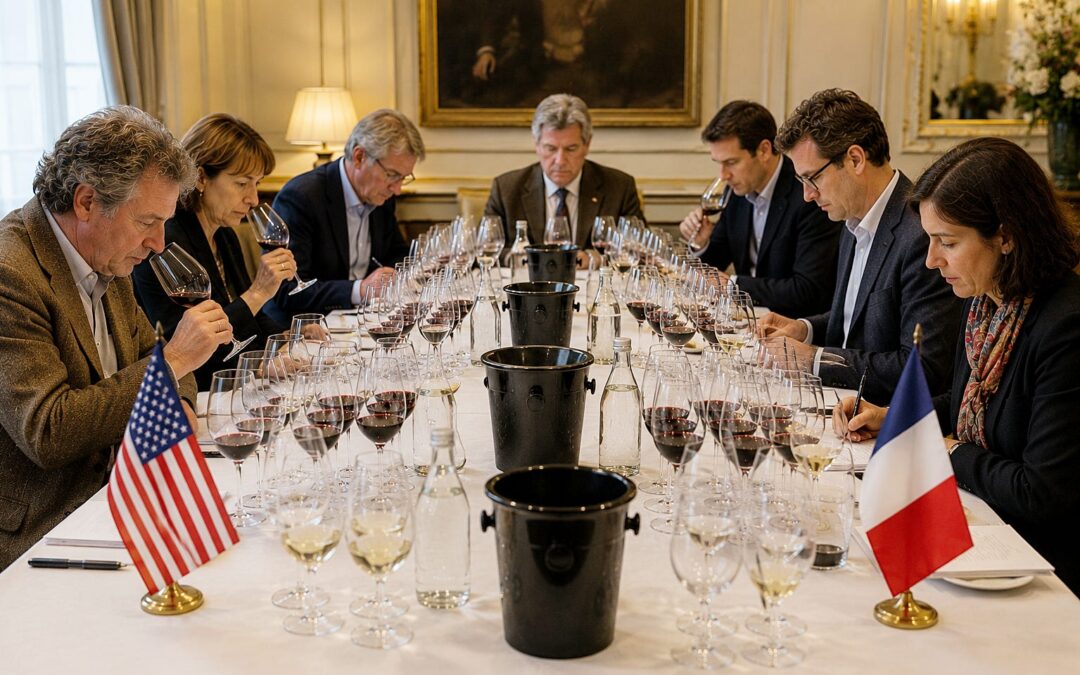
Enter the “Judgment of Paris”, held on 24 May 1976. Intended as a pleasant celebration of the United States Bicentennial, it became one of the biggest wine world shocks ever since somebody decided grapes were better fermented than eaten. Organised in Paris by British wine merchant Steven Spurrier and his American colleague Patricia Gallagher, the event brought together a panel of respected French wine experts for a blind tasting of top French wines against challengers from California.
Few expected much drama. France and Italy were widely regarded as the undisputed homes of the world’s finest wines. Even Spurrier himself, who made his living selling French wines, assumed the French entries would prevail comfortably. They did not. When the scores were revealed, Napa Valley wines had beaten notable French wines in both the Chardonnay and Cabernet Sauvignon categories. In addition to raising the collective French eyebrow, the result also landed in the wine trade like a champagne cork fired in a library.
But what it really did was open the door for New World wine regions around the globe. The decades that followed saw an explosion of confidence throughout the New World. Investment increased, oenological knowledge spread, and viticultural practices improved. Regions once viewed as curious outsiders began producing wines capable of standing alongside the world’s best. California rapidly capitalised on its success in Paris. Australia, meanwhile, went from the country that had served me those questionable glasses in the early 1980s to one producing internationally acclaimed Shiraz, Cabernet Sauvignon and Chardonnay.
New Zealand transformed Sauvignon Blanc into a global phenomenon, spreading its fame far beyond the iconic French labels of Sancerre and Pouilly-Fumé. Argentina found international recognition through Malbec, one of my personal favourites, while Chile and South Africa steadily earned their places on some of the world’s better wine lists. Even established Old World producers such as Spain, and particularly Portugal, benefited from the broader horizons of wine lovers, sommeliers and F&B professionals.
What I particularly like about the Judgement of Paris is that it wasn’t a victory of California over France, but a welcome triumph for wine lovers everywhere. France remains one of the world’s greatest wine-producing nations, but the event helped transform wine from an exclusive European club into a genuinely international conversation. It encouraged people to judge what was in the glass rather than where the label was printed.
And that can only be considered a very good thing indeed.
Image Credit: https://www.churrascophuket.com (AI Generated)
_ _ _
© CHURRASCO PHUKET STEAKHOUSE / ALL RIGHTS RESERVED
Reprinting, reposting & sharing allowed, in exchange for a backlink and credits
Churrasco Phuket Steakhouse serves affordable Wagyu and Black Angus steaks and burgers. We are open daily from 12noon to 11pm at Jungceylon Shopping Center in Patong / Phuket.
We are family-friendly and offer free parking and Wi-Fi for guests. See our menus, reserve your table, find our location, and check all guest reviews here:
https://ChurrascoPhuket.com/
#Churrascophuket #jungceylon #phuketsteakhouse #affordablewagyu #wagyu
by lspeed | Jun 14, 2026 | WINES: UNCORKING THE MYSTERY
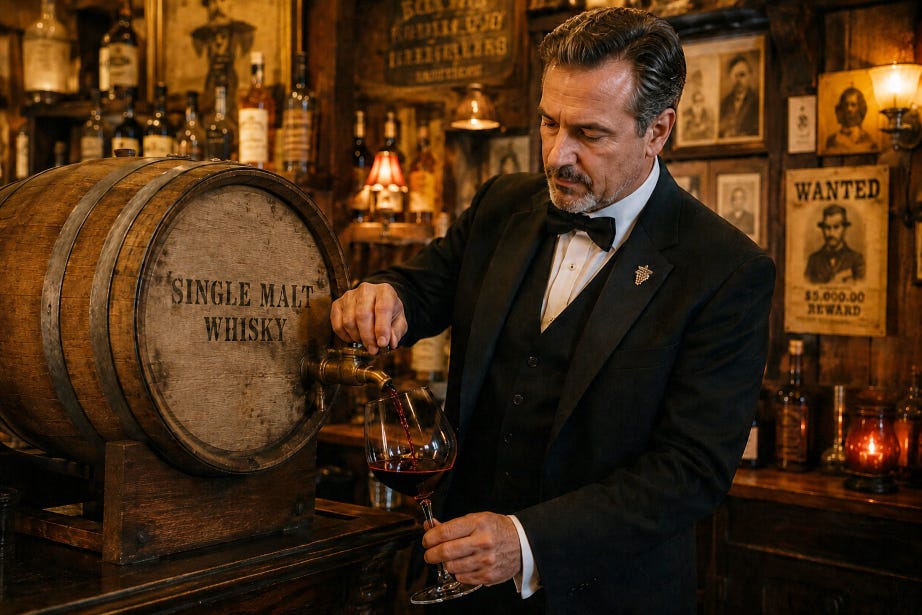
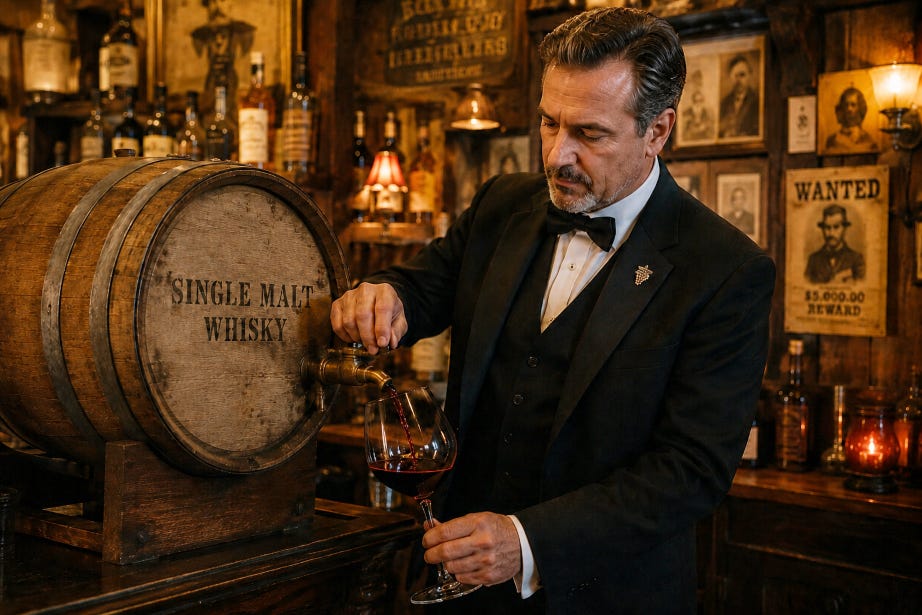
A few weeks ago, a friend met me for dinner at our steakhouse Churrasco Phuket, carrying a bottle of red wine that looked like it was ‘liberated’ from behind the counter of a dingy frontier saloon. The label read Three Finger Jack Rum Barrel Aged Red Blend, inspired by a legendary outlaw of the same name. He supposedly was some rogue character wandering through California’s foothills during the Gold Rush era in pursuit of riches and trouble in equal measure. The bottle looked dark, dramatic and somewhere reminiscent of a container for barbecue sauce.
As its label stated, this wine was partially aged in former rum barrels. To me as a traditionalist old school wine loving boomer, the whole concept of having wines aged in spirit barrels sounds like one of those ideas developed during a late night marketing meeting. One of those that involved too much bourbon or other suspect substances, and not enough restraint.
But curiosity tends to win at steak dinners, so we opened it. The wine itself turned out to be drinkable, built around Merlot, Syrah, and a touch of Petite Sirah, which delivered fruit, spice and a distinct but mild sweetness from the rum barrel ageing. There were other hints of something slightly molasses-like, ending in a rich, warm and unapologetically modern finish.
Not particularly subtle or elegant, but undeniably interesting and different.
And that seems to be the entire point of spirit barrel aged wine. Traditional wine regions spent generations, centuries even, refining strict rules around barrels and ageing and an endless list of other things. Bordeaux did not dedicate 200 years to perfecting Cabernet merely so somebody in California could finish Merlot inside an ex rum cask and sell it with outlaw branding. Scotch tasted like scotch, rum lived in the Caribbean, and bourbon dwelled in Kentucky. End of story.
That is, until someone somewhere decided to roll red wine into used spirit barrels and discovered that consumers rather liked the strange hybrid that emerged. The category exploded particularly in the United States during the 2010s, where experimentation in wine tends to be viewed not as heresy but as healthy entrepreneurship.
One of the better known examples is Robert Mondavi Private Selection Rum Barrel Aged Merlot, which combines plush California fruit with dark rum barrel influence. It became one of the first widely distributed wines of this category, proving that spirit barrel ageing was not just a passing fad. Then came Bota Box Rum Barrel Red Blend, which demonstrated that the category had moved into the mainstream. Once boxed wine joined the movement, it was safe to say the experiment had officially and successfully escaped the laboratory.
Bourbon barrel ageing soon entered the scene, and became even more popular than rum finishes. Apothic released Inferno, aged in whiskey barrels for 60 days. Josh Cellars launched Bourbon Barrel Cabernet. 19 Crimes embraced the style enthusiastically with its California red blends and celebrity collaborations. Cooper & Thief practically built an entire business model around spirit finished wines, experimenting with bourbon, rye whiskey, and brandy.
Some producers went even further. There are now tequila barrel aged Sauvignon Blancs, rye barrel Zinfandels, Scotch finished Pinot Noirs, and port wine cask Cabernet blends floating around the market. Some work surprisingly well, but many taste like a cocktail searching for the meaning of its existence.
Not surprisingly, traditional sommeliers are and will remain deeply skeptical. Their criticism is not unfair or snob-based, because spirit barrel ageing can overwhelm varietal character and mask terroir expression under layers of sweetness, smoke and oak. Clearly, a delicate Pinot Noir will not emerge from a bourbon barrel with much of its dignity intact.
But these boozy wines are not trying to compete with first growth Bordeaux or fine Burgundy. They occupy a completely different cultural lane, being designed for curiosity, accessibility and flavour impact rather than quiet refinement. Commercially, the strategy has been effective because it attracts drinkers who may not normally buy wine at all. Bourbon lovers understand bourbon barrels, and rum drinkers understand finely differentiated sweetness.
The flavour profile becomes immediately approachable without requiring encyclopedic wine knowledge or the skillful faking of it. It also reflects a wider shift in modern drinking culture. Younger consumers happily move between wine, cocktails, craft beer and whisky, without much concern for traditional boundaries. The old tribal loyalties between beverage categories are falling, and that is why these weird new wines will continue to grow.
As for that bottle of Three Finger Jack at our steak dinner, I am certainly not converted, remaining loyal to classic full-on reds with long pedigrees and deeply serious labels. But I will admit that this particular outlaw bottle disappeared rather quickly that night.
Image Credit: https://www.churrascophuket.com (AI Generated)
_ _ _
© CHURRASCO PHUKET STEAKHOUSE / ALL RIGHTS RESERVED
Reprinting, reposting & sharing allowed, in exchange for a backlink and credits
Churrasco Phuket Steakhouse serves affordable Wagyu and Black Angus steaks and burgers. We are open daily from 12noon to 11pm at Jungceylon Shopping Center in Patong / Phuket.
We are family-friendly and offer free parking and Wi-Fi for guests. See our menus, reserve your table, find our location, and check all guest reviews here:
https://ChurrascoPhuket.com/
#Churrascophuket #jungceylon #phuketsteakhouse #affordablewagyu #wagyu