by lspeed | Nov 8, 2026 | BLACK BOX: RANTS, RAVES, REVIEWS & RECIPES
An ancient French culinary guild with a taste for ceremony
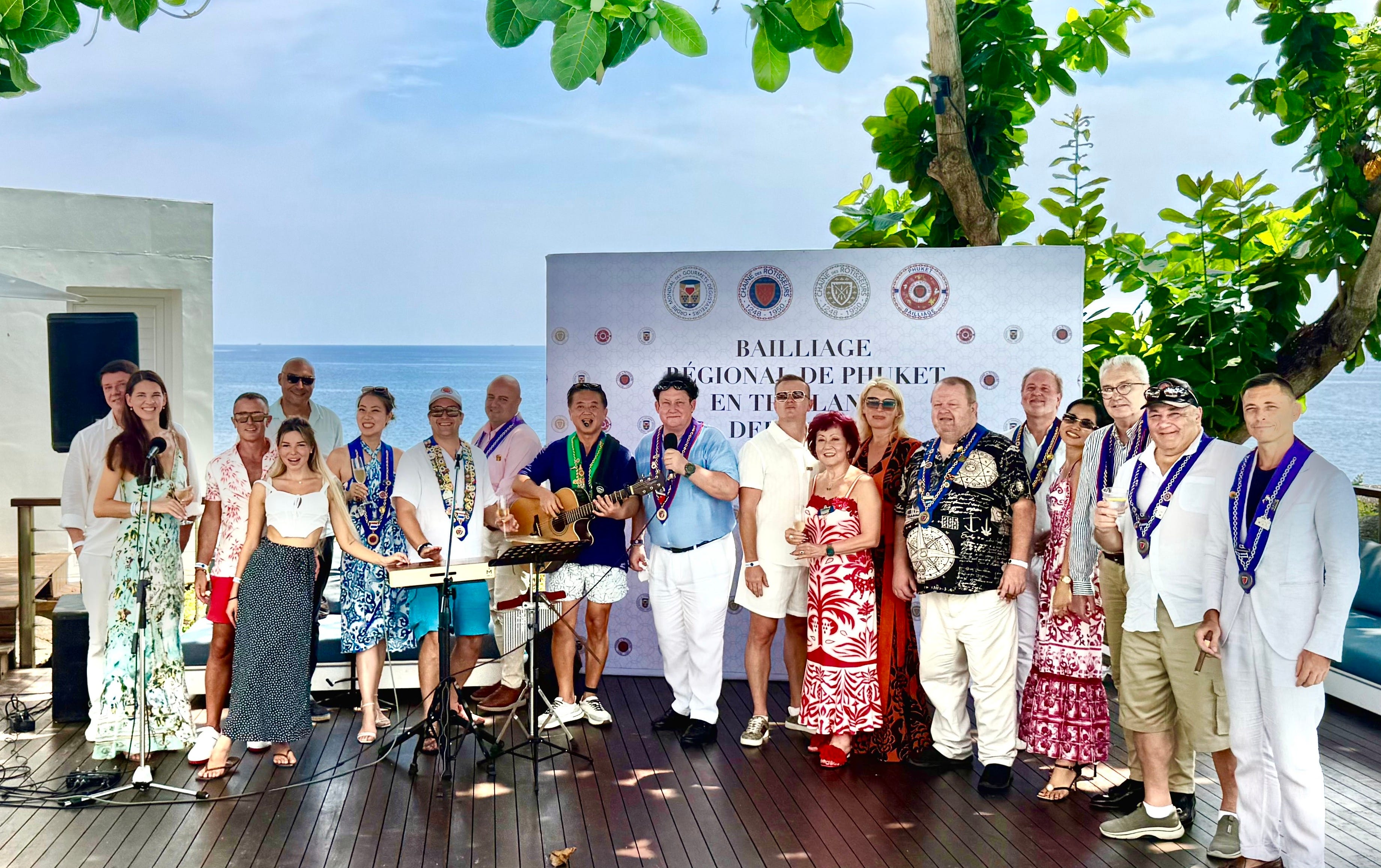
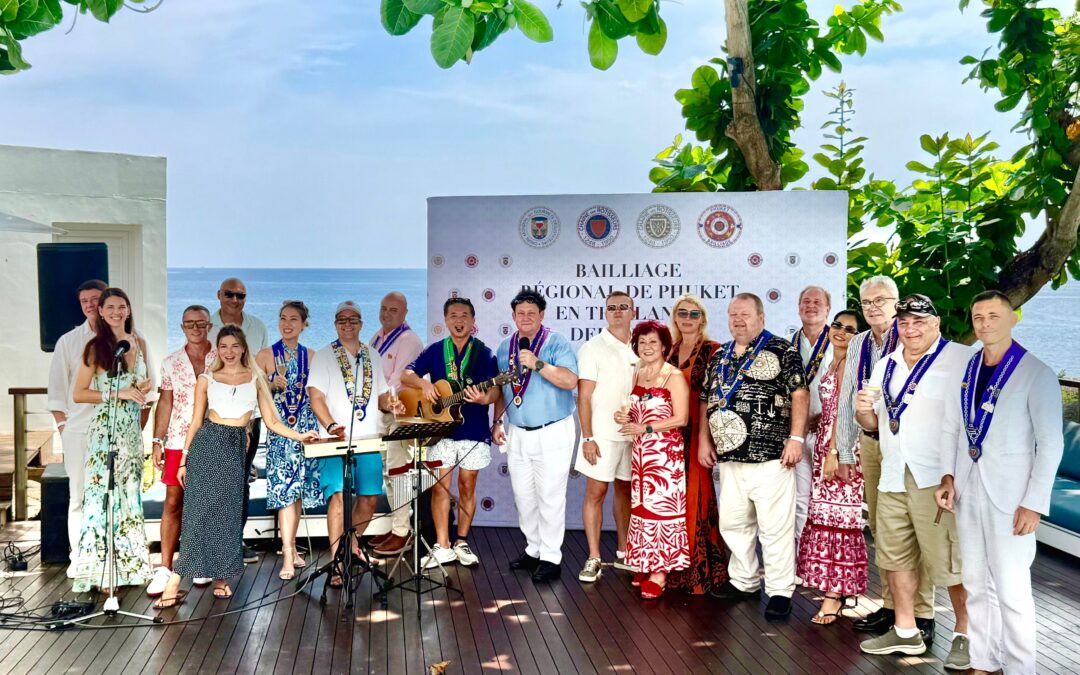
We recently joined the Phuket chapter of Chaîne des Rôtisseurs, an international gastronomic association whose name is considerably harder to pronounce than its purpose is to understand. Since we own Churrasco Phuket Steakhouse, our membership now connects us with this worldwide community of chefs, restaurateurs, sommeliers and enthusiastic diners. All of whom share an appreciation of good food, fine wine and the true meaning of hospitality. Our kind of people.
For a steakhouse, joining an organisation with its roots in medieval meat roasting seems particularly appropriate. But there is considerably more to the Chaîne than elaborate dinners and impressive-looking medals. The story begins in France in 1248, during the reign of King Louis IX, when professional guilds regulated various trades, including the roasting of geese. Apparently, preparing poultry was sufficiently important in medieval France to warrant its own professional organisation.
Over time, the guild expanded its activities to other meats and game, eventually becoming known as the Rôtisseurs. It acquired its coat of arms in 1610, featuring crossed roasting spits surrounded by flames. The French Revolution abolished the entire guild system in 1793, bringing this particular chapter of culinary history to an abrupt end. Hopefully, without any heads rolling.
Its revival came in Paris in 1950, when five French gastronomes, including the celebrated food writer Curnonsky, established the modern Chaîne des Rôtisseurs. Their ambition was to revive the traditions of culinary craftsmanship, professional fellowship and appreciation of good food. Today, the association operates in more than 75 countries, with approximately 25,000 members and international headquarters in Paris.
The Chaîne operates through national and local chapters called Bailliages, headed by officers bearing traditional French titles. Its membership deliberately combines hospitality professionals with non-professional enthusiasts, bringing together people who usually meet on opposite sides of a restaurant table. A chef might find himself seated beside a banker, a restaurateur beside a wine collector, or a hotelier discussing sauces with someone whose culinary expertise consists mainly of knowing where to eat. As restaurateurs, this is one aspect we especially love.
The association has an elaborate system of ranks and insignia, which a friend of ours only half jokingly compared with the regalia of Freemasons. Far from it, actually, as there is nothing secretive or clandestine about the Chaîne, except perhaps the odd confidential recipe tip exchanged after enough wine was served. But inducted members do wear coloured ribbons and medallions identifying their membership grade or professional position, with titles such as Chevalier, Maître Rôtisseur and Officier.
The principal ceremonial occasion is the Grand Chapitre, often a multi-day gathering culminating in the formal induction of new members. The ceremony traditionally involves a symbolic roasting spit, formal declarations and the presentation of insignia. It is an unmistakably French combination of medieval symbolism, elaborate protocol and culinary enthusiasm. Behind the ceremonies lies the principal attraction, and that is dining together with like-minded people. Local chapters organise gastronomic dinners, wine tastings and culinary excursions. Some are black-tie occasions featuring elaborate menus and wine pairings, others are relatively informal gatherings, called Dîner Amical.
Participating restaurants have an opportunity to demonstrate their cooking and service to an audience that deeply understands hospitality. The Chaîne also supports international competitions for young chefs and sommeliers, while its wine-focused branch, the Ordre Mondial des Gourmets Dégustateurs, promotes appreciation of wines and other beverages.
The Chaîne’s historical connection with roasting meat makes our membership fitting, although Latin-style steakhouse grilling differs considerably from medieval French goose roasting. And at Churrasco Phuket Steakhouse, we never considered fine dining to be our central theme, something defined by white tablecloths, complicated menus or tiny portions arranged with tweezers. Our interpretation has always been about properly sourced beef, careful preparation, appropriate wines, attentive but relaxed service, and guests who enjoy their evening. We will fit right in.
Membership is not a restaurant rating or independent quality certification. It represents participation in an international gastronomic community, with opportunities to exchange ideas and experiences, and make friends across the table. And while the ribbons, medals and ceremonies add colour, the underlying principle always remains on great food and memorable dinners.
Preferably with a decent bottle of wine. Or two …
Image Credit: https://www.chainephuket.com/img/events/20260425_wcd/8.jpg
_ _ _
© CHURRASCO PHUKET STEAKHOUSE / ALL RIGHTS RESERVED
Reprinting, reposting & sharing allowed, in exchange for a backlink and credits
Churrasco Phuket Steakhouse serves affordable Wagyu and Black Angus steaks and burgers. We are open daily from 12noon to 11pm at Jungceylon Shopping Center in Patong / Phuket.
We are family-friendly and offer free parking and Wi-Fi for guests. See our menus, reserve your table, find our location, and check all guest reviews here:
https://ChurrascoPhuket.com/
#Churrascophuket #jungceylon #phuketsteakhouse #affordablewagyu #wagyu
by lspeed | Oct 11, 2026 | BLACK BOX: RANTS, RAVES, REVIEWS & RECIPES
BACALAO: HOW SALTED COD CONQUERED THE WORLD
To us as restaurant owners, nothing is more important than freshness. We buy vegetables daily, make our sauces from scratch, and insist that all our imported meats arrive deep-chilled rather than frozen. We have occasionally sent entire beef deliveries back because we could tell they had been frozen before they arrived, even if it meant that some menu items would be unavailable for the day. So we find it kind of hilarious that one of the enduring culinary traditions of the Latin world is built around a fish that conquered half the world precisely because nobody needed it to be fresh.
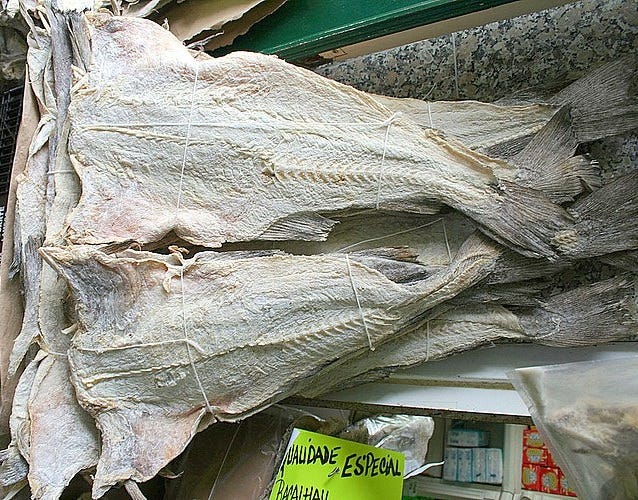
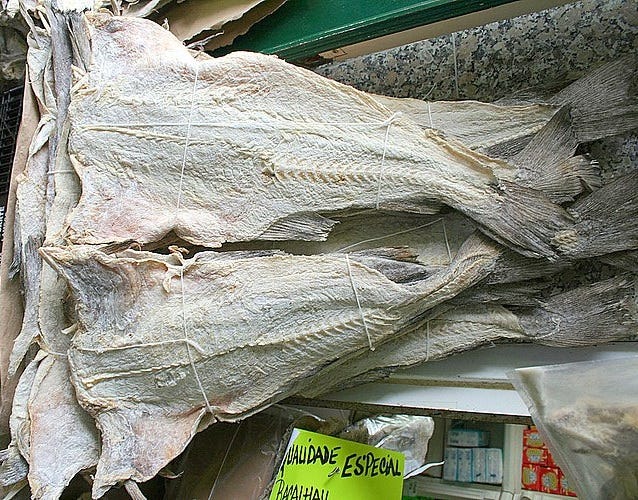
Salt cod began as dire necessity rather than brilliant gastronomy. The North Atlantic was full of cod, but many people who wanted to eat it lived thousands of kilometres away. Norse cultures dried cod into stockfish that would last for months, and traders relied on salt for preservation. Religion then provided a massive marketing boost, because Catholics observe so many meatless days, particularly Fridays and Lent. A fish able to survive a long journey and sit patiently in a storeroom was both useful and valuable.
Nobody seems quite sure where the name of this peculiar dried fish comes from. One theory is that the word is related to the Dutch kabeljauw (cod), with the sounds of the word adapted as it travelled south to the Iberian Peninsula. Another suggests it may come from the Latin baculum, meaning stick, because dried cod is as stiff as one. Culinary history is full of such linguistic migrations and contortions, but in the end it’s all about taste and acceptance.
Venice turned it into baccalà mantecato, a Venetian menu mainstay, by working the soaked fish with olive oil until pale and almost mousse-like, then serving it on polenta or crostini. Further inland in Vicenza, bacalà alla vicentina is cooked slowly with onions, anchovies, olive oil and milk until soft and rich. Confusingly, both cities use the word baccalà for dried stockfish, while other Italians use it for salt cod. We don’t get involved, because one of our owners is Italian, and know better than to referee them about food.
Portugal took the relationship further than anyone. Its fishermen sailed as far as Newfoundland in search of cod, and bacalhau became central to the national kitchen. Hence the famous claim of 365 recipes, one for every day of the year. Spain developed its own formidable tradition, including the Basque bacalao al pil-pil, where cod, garlic and olive oil are gently worked together until the fish’s natural gelatin emulsifies with the oil to create a thick, silky sauce. With so few ingredients, there is nowhere for the cook to hide, which is why chefs have so much respect for it.
The fish eventually crossed the Atlantic, but for much less romantic reasons. Salt cod became an important food in the Caribbean plantation economy, including as provisions for enslaved workers. Over time, it was absorbed into local cooking, and Jamaica’s ackee and saltfish became the national dish. Other expressions, like bacalao guisado, combine shredded cod with tomatoes, peppers, onions, olives and capers. A preservation method developed around the cold North Atlantic had found an entirely new tropical life in the Caribbean.
South America embraced it too, most obviously in Brazil, where Portuguese colonisation brought the bacalhau tradition across the Atlantic. It remains closely associated with Christmas, Easter and family celebrations. Brazilians bake it with potatoes, onions, peppers, olives and plenty of olive oil, and turn it into casseroles and bolinhos de bacalhau, crisp little salt-cod fritters that quickly disappear at parties. Elsewhere on the continent, particularly in countries with strong Spanish and Portuguese influence, salt cod appears in stews, empanadas and Easter dishes.
As a South American steakhouse, we have occasionally debated adding it to the menu. So far the answer has been no, because anything that needs days of soaking before cooking would lead to a mass kitchen staff exodus. And we are a steakhouse, after all. But we have enormous respect for an ingredient that travelled from the North Atlantic to Italy, Iberia, the Caribbean and South America, changing character wherever it landed.
Sometimes, freshness isn’t everything.
Image Credit: https://en.wikipedia.org/wiki/Dried_and_salted_cod
_ _ _
© CHURRASCO PHUKET STEAKHOUSE / ALL RIGHTS RESERVED
Reprinting, reposting & sharing allowed, in exchange for a backlink and credits
Churrasco Phuket Steakhouse serves affordable Wagyu and Black Angus steaks and burgers. We are open daily from 12noon to 11pm at Jungceylon Shopping Center in Patong / Phuket.
We are family-friendly and offer free parking and Wi-Fi for guests. See our menus, reserve your table, find our location, and check all guest reviews here:
https://ChurrascoPhuket.com/
#Churrascophuket #jungceylon #phuketsteakhouse #affordablewagyu #wagyu
by lspeed | Aug 16, 2026 | BLACK BOX: RANTS, RAVES, REVIEWS & RECIPES
My long standing business partner being Italian, I learned early that there are subjects you better not argue about. Football is one, coffee another, and al dente or precooked pasta should never be a discussion subject anyway anywhere. But if you’re brave enough (which I am not), and want to ruin a perfectly nice conversation with an Italian, casually mention that gelato owes a debt to the United States.
The room around you will turn arctic immediately.
Unfortunately though, history is mischievous. Italy’s love affair with frozen desserts does indeed go back centuries. Florence gets most of the credit, thanks to architect, engineer, and general Renaissance overachiever Bernardo Buontalenti, who’s said to have whipped up an early milk-and-egg frozen cream. A century later, Sicilian emigrant Francesco Procopio dei Coltelli took the idea to Paris and opened Café Procope, turning frozen desserts into the hottest thing among people wearing far more lace than they should.
But the sticking point remained that actually making the stuff was brutal. Ice, salt, metal tubs, and a lot of frantic hand-stirring sounds charming in a cookbook, but considerably less so if you’re doing the stirring at 5am.
That is, until America blundered into the Italian ice cream parlour.
In 1843, American inventor Nancy Johnson patented a hand-cranked freezer with a rotating beater. A small idea that made a huge difference to to frozen desserts. But the real breakthrough came only decades later. In 1904, Harry Miller of Ohio built a horizontal freezer that circulated refrigerated brine around the mix. A year after that, New York’s Emery Thompson came up with a gravity-fed vertical batch freezer.
Suddenly you could freeze the mixture fast while churning it continuously, which meant tiny ice crystals, better texture, and way more control over how much air got folded in. And this is where the story gets awkward for gelato purists.
That batch freezer is, essentially, the mechanical heart of every Gelateria on earth. Instead of a heroic employee and a bucket of salted ice, you get refrigeration and rotating blades doing the freezing and churning. Smaller ice crystals give you that famously silky texture. Careful control of air gives artisan gelato its dense, rich bite, which is very different from the fluffier mass-produced ice cream.
The Italians didn’t just take a good look and move on, they improved on it. In Bologna, Otello Cattabriga patented an automatic gelato machine in 1927. Then, in the 1940s, engineer Bruto Carpigiani built his Autogelatiera, using a rotating helical spatula to make production faster and more consistent. He died in 1945, just before his invention took off commercially. But his brother Poerio continued and founded Carpigiani in 1946, a name that became synonymous with professional Gelato equipment worldwide.
Add in post-war refrigeration and pasteurisation tech, and proper refrigerated display cases, and you’ve got the full transformation. Gelato went from a fragile, ice-and-muscle craft to something that could be made safely and consistently, without losing an ounce of the skill, flavour, or creativity that makes it special.
So, who really invented modern gelato?
As with all food history, the answer is “it’s complicated”. Italy brought centuries of obsession, technique, and flavour. America added useful engineering. Italy took that engineering, refined it, and somehow made the whole world forget where it came from.
Which, in essence, a very Italian move.
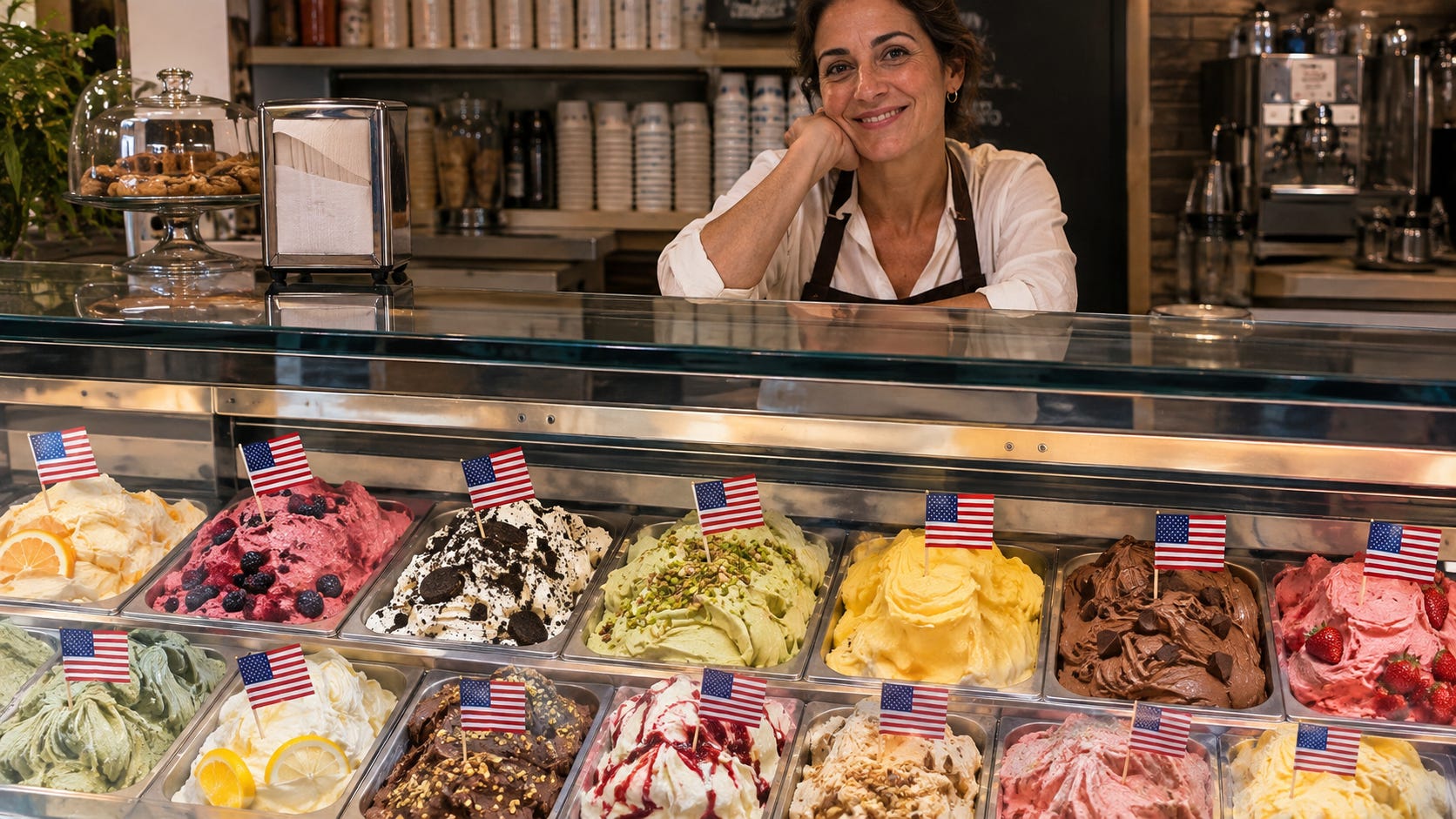
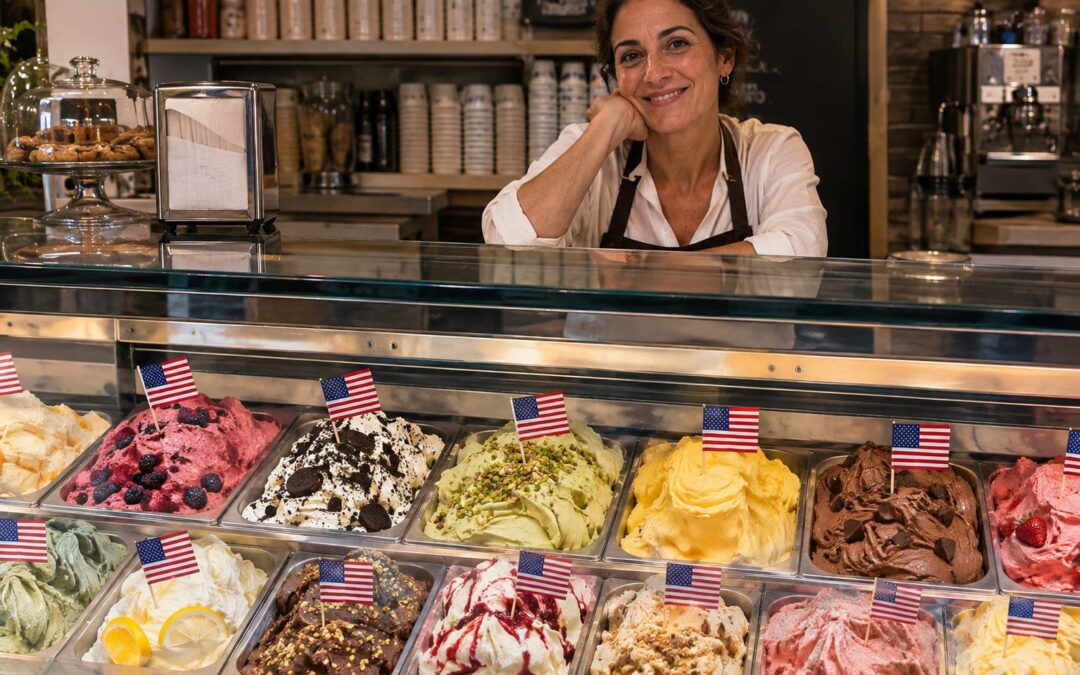
Image Credit: https://www.churrascophuket.com (AI Generated)
_ _ _
© CHURRASCO PHUKET STEAKHOUSE / ALL RIGHTS RESERVED
Reprinting, reposting & sharing allowed, in exchange for a backlink and credits
Churrasco Phuket Steakhouse serves affordable Wagyu and Black Angus steaks and burgers. We are open daily from 12noon to 11pm at Jungceylon Shopping Center in Patong / Phuket.
We are family-friendly and offer free parking and Wi-Fi for guests. See our menus, reserve your table, find our location, and check all guest reviews here:
https://ChurrascoPhuket.com/
#Churrascophuket #jungceylon #phuketsteakhouse #affordablewagyu #wagyu
by lspeed | Apr 19, 2026 | BLACK BOX: RANTS, RAVES, REVIEWS & RECIPES
The burger began life with all the glamour of wet rope and dockyard grit. Its ancestor, the Hamburg steak, arrived in late 19th century America, courtesy of German immigrants who had little culture and patience for culinary theatrics. This was minced beef, seasoned, cooked, and dispatched with efficiency – no garnish, no narrative, and no ambition beyond solving hunger pangs. When placed between two slices of bread with Teutonic efficiency, the modern burger clicked into place. Portable, edible, and structurally sound, it was less a dish than a piece of food engineering.
What followed was not evolution but global opportunism. The burger was built on a flexible blueprint and proved remarkably easy to export. America standardised it, scaled it, and sent it out into the world as both product and idea. Fast, cheap, consistent, and only very faintly indulgent, it was the edible equivalent of a well run assembly line. When it arrived in foreign markets, it did what all successful emigrants do – adapt quickly and without sentiment.
Local Flavours, Same Core Idea
Japan gave it teriyaki, a lacquer of sweet soy that turned it into something exotic. India removed the beef altogether and replaced it with Aloo Tikki, a spiced potato patty that retained the structure while rewiring the substance. Mexico, predictably, added heat and generosity, layering jalapeños, avocado, and enough personality to make the original look underdressed. Variations appeared everywhere, each one bending the rules without breaking the format. The burger’s genius lies in its elasticity. Change the filling, adjust the seasoning, swap the bun, and it is still a burger.
A Move Upmarket
For most of its life, it remained aggressively democratic. It belonged to the street, the roadside stand, the fast food counter humming with fluorescent excess. It was eaten standing up, in cars, at desks, occasionally with moments of regret. It required no explanation and you knew exactly what you were getting. Then, in the early 2000s, the burger wandered into better neighbourhoods and stubbornly refused to leave. Chefs and restaurant owners began to reconsider it, because here was a format that everyone understood, a blank canvas disguised as comfort food.
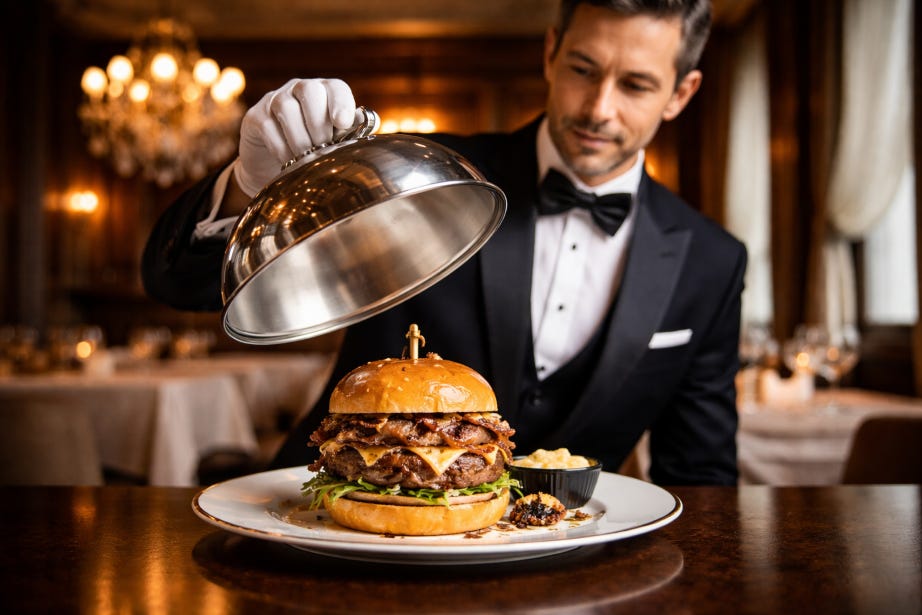
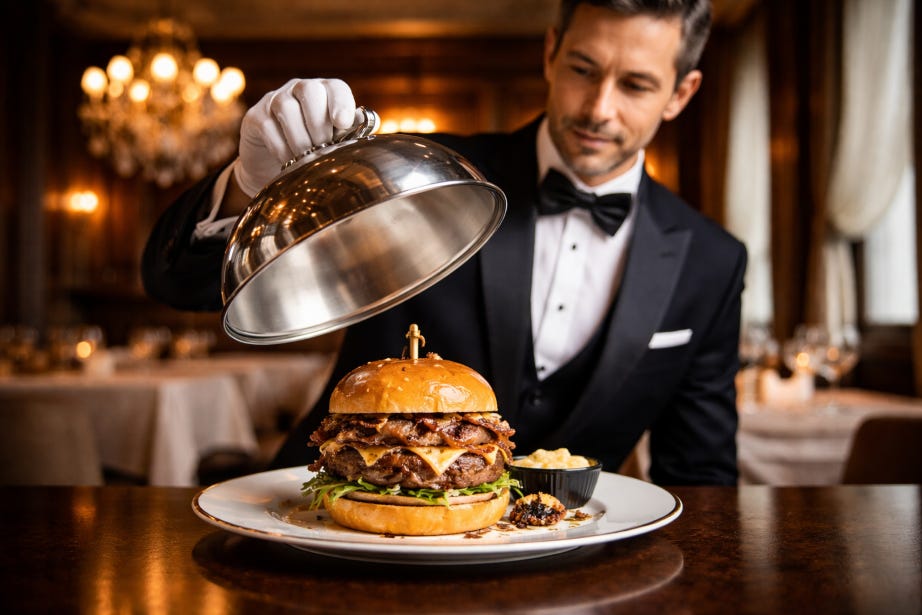
So, why not elevate it by taking something deliberately ordinary and treat it with the seriousness reserved for white tablecloth settings. The results have landed somewhere between impressive and ridiculous. Wagyu beef, with its intricate marbling and higher cost, successfully replaced standard mince in the right settings. Black truffles and foie gras made their inevitable entrance, because restraint had left the building. Brioche buns appeared, richer and just indulgent enough to suggest that the burger had started growing ambitions. There are weird gold leaf versions too, which are both edible and entirely unnecessary, a rare culinary achievement in itself.
The Big Boys Join The Climb
The familiar chains were watching all this with a mixture of curiosity and mild panic and attempted their own upgrades. This did not always go down well. McDonald’s flirted with premium lines such as their “Signature” and “Gourmet” ranges, swapping sesame buns for brioche and adding ingredients that sounded like they had attended but never finished graduate school. The problem was not the idea but the setting, because a softly lit description loses its charm under fluorescent lighting and next to a self service kiosk.
Burger King tried similar manoeuvres, leaning on Angus beef and thicker patties, occasionally landing a decent result but rarely shaking off the sense that this was a familiar product wearing a borrowed jacket. Wendy’s has arguably done better, leaning into fresh beef positioning and incremental upgrades rather than full theatrical reinvention. Meanwhile, various limited edition “luxury” launches across the industry have come and gone with the quiet dignity of a short lived experiment. It proves the hard gastronomical truth that you can adjust ingredients, but a truffle mayo can only do so much for you when eaten in a moving car.
New Players, Same Issues
The newer generation introduced themselves with the confidence and pricing of tech start ups. Shake Shack polished the model with tidy branding, cleaner sourcing narratives, and burgers that had manners. Five Guys doubled down on customisation and abundance, offering peanuts as a side dish and the reassuring sense that excess was allowed. Smashburger went into full commando mode with the technique, flattening patties onto searing grills with evangelical zeal. All three flirted with being “posh”, or at least the idea of it, but the outcome remains curiously similar. The setting is still casual, the service still functional, and the experience still fundamentally transactional. Prices crept upward and language became more polished, but the leap to genuine luxury never materialised. Better ingredients and sharper branding alone cannot disguise that you are still queuing, still carrying your own tray, and still deciding if you really want to sit next to that overflowing trash can.
The Steakhouse Angle
And yet, the upmarket appeal holds. The luxury burger works because it plays both sides, offering faint nostalgia and indulgence in the same bite. It allows chefs like ours to showcase sourcing, technique, and imagination, while diners get to pretend that what they are eating is still casual. It is comfort food in a tailored jacket, and at Churrasco Phuket Steakhouse, this shift came not as a reinvention, but a logical extension of what already worked for us.
A kitchen like ours that understands beef at a very serious level will sooner or later turn its attention to the better class burger. The result is the range of our every popular Wagyu gourmet burgers, built around quality ingredients and clear intent. Truffle and chimichurri combinations sit alongside classic Wagyu cheeseburgers, several creative but understandable smashburger options, and a Creole style lamb burger.
All are certified halal and designed with the same underlying principle – start with good product, treat it respectfully, and avoid unnecessary theatrics. No gold leafs for us, thank you. Our guests have embraced the idea. Our steakhouse burgers have always been about satisfaction, and adding better ingredients improved the experience rather than complicate it. Our affordable Wagyu burgers remain approachable, recognisable, and reassuringly unfussy, even when dressed up.
From dockside practicality to global luxury prop, the burger absorbed cultures, industrialisation, and somehow found its way onto menus where the lighting is dim and the prices are not. Through all of this, it has retained its essential logic that brilliant ideas do not need much improvement, just creativity, better ingredients – and the occasional sense of humour.
Image Credit: https://www.churrascophuket.com (AI Generated)
_ _ _
© CHURRASCO PHUKET STEAKHOUSE / ALL RIGHTS RESERVED
Reprinting, reposting & sharing allowed, in exchange for a backlink and credits
Churrasco Phuket Steakhouse serves affordable Wagyu and Black Angus steaks and burgers. We are open daily from 12noon to 11pm at Jungceylon Shopping Center in Patong / Phuket.
We are family-friendly and offer free parking and Wi-Fi for guests. See our menus, reserve your table, find our location, and check all guest reviews here:
https://ChurrascoPhuket.com/
#Churrascophuket #jungceylon #phuketsteakhouse #affordablewagyu #wagyu
by lspeed | Apr 5, 2026 | BLACK BOX: RANTS, RAVES, REVIEWS & RECIPES
Real food is supposed to look like something prepared and cooked by a human being, then enjoyed with varying degrees of approval by other humans. Then came the age of improvement, a category labelled “ultra processed” with admirable restraint. The benefits for busy commercial kitchens like ours seemed overwhelming. These are volatile places, and predictability is a rare and valuable asset. A product that removes guesswork, reduces training and behaves identically on a Tuesday night and a Sunday brunch is a minor miracle from an owner’s perspective.
But there is a darker side, now receiving the sort of attention usually reserved for tax policy, banking regulation or the tobacco industry. The tone has cooled, and the shift is not merely philosophical. A growing body of research has begun to associate diets heavy in these engineered foods with an impressive catalogue of modern ailments: expanding waistlines, confused blood sugar, overworked hearts and a tendency for the body to age less gracefully than advertised.
None of this is especially theatrical, but it is cumulative, the nutritional equivalent of small decisions adding up in the wrong direction. Cooking from scratch, by contrast, is a less obedient enterprise. Ingredients arrive with variation built in. A tomato may decide to be sweeter than expected. A cut of meat requires negotiation rather than instruction. Sauces demand tasting, adjusting and the occasional admission that they need urgent help. None of this is efficient, but all of it is the job of a quality restaurant.
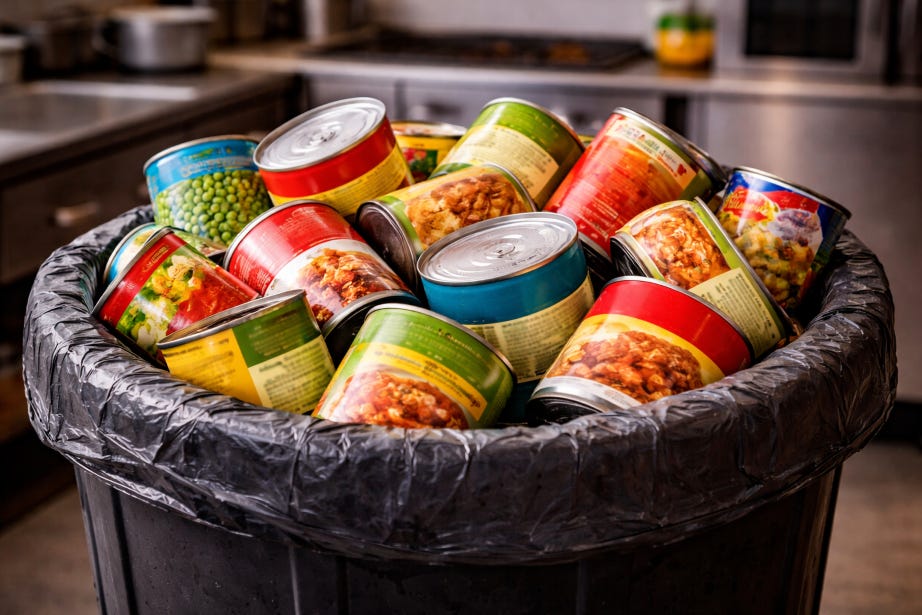
In our own kitchen, we have chosen this slower path, partly out of principle and partly out of habit. We avoid cans wherever possible. Sauces begin as ingredients rather than inventory. We make our own marinades and spice mixes, even pickles. This introduces a certain amount of friction, as things require planning, take longer and results can vary slightly. Staff are required to think ahead and under pressure, which is not always convenient during a busy Saturday night service.
The rewards we see are subtle but persistent. Our food retains a sense of having been made rather than assembled. A pickle may lean sharper one week, softer the next. A sauce might carry the faint imprint of whoever last adjusted it. These are not defects so much as evidence that something entirely human and relatable has taken place.
Convenience has never struggled to find an audience. But as diners grow more curious about what sits behind and on the plate, we offer the quiet reassurance of a kitchen that still relies on knives, heat, experience, and judgement rather than instructions printed on the back of a packet.
Our lasting success seems to validate this. For now.
Image Credit: https://www.churrascophuket.com (AI Generated)
_ _ _
© CHURRASCO PHUKET STEAKHOUSE / ALL RIGHTS RESERVED
Reprinting, reposting & sharing allowed, in exchange for a backlink and credits
Churrasco Phuket Steakhouse serves affordable Wagyu and Black Angus steaks and burgers. We are open daily from 12noon to 11pm at Jungceylon Shopping Center in Patong / Phuket.
We are family-friendly and offer free parking and Wi-Fi for guests. See our menus, reserve your table, find our location, and check all guest reviews here:
https://ChurrascoPhuket.com/
#Churrascophuket #jungceylon #phuketsteakhouse #affordablewagyu #wagyu

by lspeed | Mar 22, 2026 | BLACK BOX: RANTS, RAVES, REVIEWS & RECIPES
History tends to celebrate conquerors, kings and the occasional philosopher who managed to invent both a theory and a scandal. The quiet revolutionaries of the kitchen receive far less attention, such as Antoine Augustin Parmentier. A pharmacist by training and a potato evangelist by vocation, he spent much of the late eighteenth century persuading France that a strange underground root vegetable was not a threat to civilisation.
At the time the potato was widely suspected of being the botanical equivalent of a criminal. Many Europeans believed it caused disease, moral decline and an unattractive complexion. In France it was often relegated to animal feed. Its reputation had not been helped by the fact that it belonged to the nightshade family, a group of plants that includes several species with the social habits of poison.
Parmentier encountered the potato under unusual circumstances. During the Seven Years’ War he was captured by the Prussians and, as a prisoner of war, fed a steady diet of potatoes. Instead of dying, which would have confirmed prevailing French wisdom, he emerged perfectly healthy. This led him to suspect that the vegetable might have been unfairly maligned.
Back in France he embarked on what would today be called a public relations campaign. The Enlightenment produced many great thinkers, but Parmentier may have been the first man to market a vegetable with the enthusiasm of a modern brand manager. He organised dinners where every dish featured potatoes.
He persuaded the French Academy to consider the humble root a solution to famine. He even convinced Louis XVI and Marie Antoinette to play along. The king reportedly wore a potato flower in his buttonhole, while the queen adorned her hair with the blossoms, a piece of culinary propaganda that made the vegetable fashionable at Versailles.
Parmentier’s most famous stunt involved a field of potatoes outside Paris. During the day it was guarded by soldiers, giving the impression that the crop was something extraordinarily valuable. At night the guards conveniently disappeared. Parisians promptly stole the potatoes, which was precisely the point. If the public believed the vegetable was worth stealing, they might also believe it worth eating.
The campaign worked. By the early nineteenth century the potato had become an accepted part of the French diet. Parmentier’s name now adorns several dishes, including Hachis Parmentier, a comforting arrangement of minced meat and mashed potato, sometimes described as the French cousin of Shepherd’s Pie.
But there is yet another culinary legacy, attributed to him with a mixture of pride and diplomatic discomfort. If Parmentier popularised the potato in France, one could argue that he is responsible for the French fry.
The suggestion unsettles people. Belgians insist that fries were invented in the Meuse valley long before Parmentier began his potato crusade. Americans have enthusiastically adopted the dish while ignoring the geopolitical implications of the word “French”. The French themselves tend to call them simply Frites, neatly sidestepping the question of who deserves credit with diplomatic aplomb.
Nevertheless, Parmentier’s role is difficult to ignore. Without his campaign the potato would well have remained a botanical curiosity in French agriculture. Without widespread potatoes there would have been no abundance of sliced, fried potato sticks. And without those, an entire global snack industry would look very different.
The modern world has taken the humble fried potato to remarkable lengths. It appears beside hamburgers in American diners, alongside steaks in Parisian bistros and inside paper cones at Belgian street stalls. Entire multinational corporations have built fortunes on little more than potatoes, salt and hot oil.
No other pharmacists can lay claim to have changed the world’s eating habits with a humble vegetable first encountered in a Prussian prison.
Image Credit: https://churrascophuket.com (AI Generated)
_ _ _
© CHURRASCO PHUKET STEAKHOUSE / ALL RIGHTS RESERVED
Reprinting, reposting & sharing allowed, in exchange for a backlink and credits
Churrasco Phuket Steakhouse serves affordable Wagyu and Black Angus steaks and burgers. We are open daily from 12noon to 11pm at Jungceylon Shopping Center in Patong / Phuket.
We are family-friendly and offer free parking and Wi-Fi for guests. See our menus, reserve your table, find our location, and check all guest reviews here:
https://ChurrascoPhuket.com/
#Churrascophuket #jungceylon #phuketsteakhouse #affordablewagyu #wagyu