by lspeed | Nov 22, 2026 | KNOWLEDGE: MEAT ESSENTIALS
We solve one of the most common kitchen wisdom confusions
After almost two decades in the steakhouse business, you better have learned that meat comes with plenty of options and opinions – especially about how it needs to be cooked. But before we head for the smoking grill, there is a common and largely misunderstood question – what exactly makes meat red or white?
You will probably say that the answer is obvious. Beef is red, chicken is white, and anything else can be decided by looking at it. Unfortunately though, nature never consulted a restaurant menu. Instead, the distinction comes down to myoglobin, an oxygen-binding protein found in muscle tissue. Animals whose muscles work hard and require substantial oxygen generally have more of it, giving their meat a darker colour.
Cattle, sheep and horses are obvious examples. Chickens, which spend more time walking than flying, have pale breast muscles but darker, more active legs. And that’s where things become really confusing, because duck and goose are poultry by definition, but their meat is darker than chicken. Ostrich and emu, both birds as well, produce deep-red meat resembling lean beef.
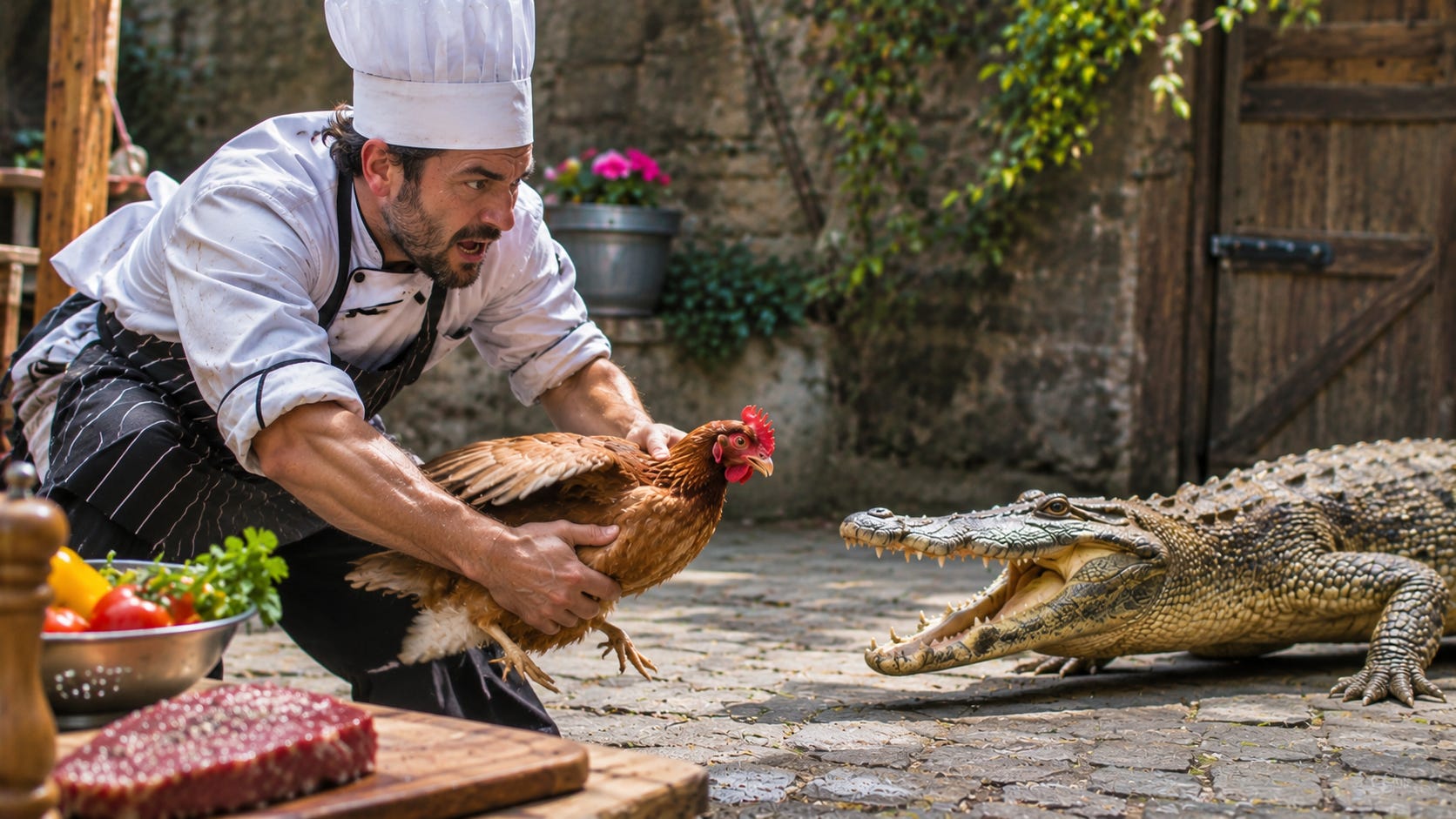
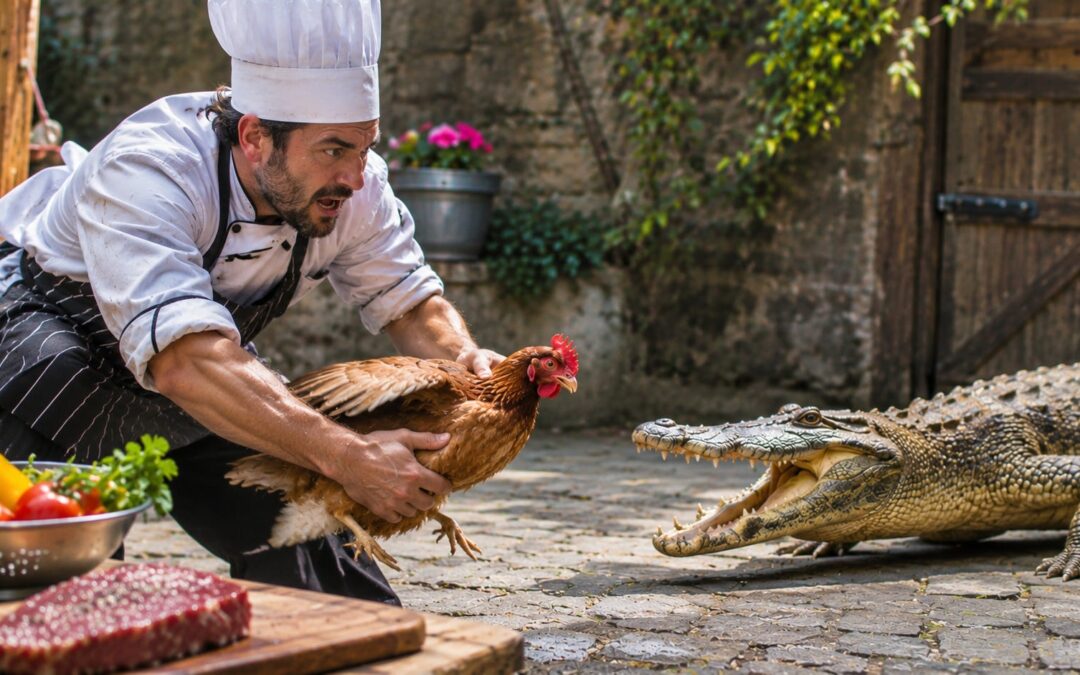
But it gets worse. Crocodile, despite looking like something that can and will eat the chef, produces pale flesh, often compared with chicken or firm fish. Then there’s rabbit, generally considered white meat. While pork – regardless of its pale appearance and decades of clever advertising – is classified as red meat nutritionally, simply because it comes from a mammal.
In the kitchen, colour is only half the story.
Chefs classify meat not merely by appearance but by muscle structure, fat content, connective tissue and how it responds to heat. A beautifully marbled rib-eye like ours benefits from intense grilling, allowing its fat to render while developing a flavourful crust. Lean venison or ostrich, on the other hand, turns dry when overcooked. Lamb shoulder needs patience and slow cooking, while lamb cutlets are perfectly happy with a few minutes over fierce heat.
Then there is everyone’s everyday chicken breast, requiring a gentler approach to retain moisture. Chicken thighs tolerate longer cooking, thanks to their greater fat and connective tissue. And crocodile tail, exceptionally lean, is best cooked briefly and carefully. As one can see, there’s no one rule to settle all questions.
Food safety introduces the other half.
Whole cuts of beef, lamb and other conventional red meats are served rare when properly handled. This is because harmful bacteria are generally concentrated on the exterior, and are therefore eliminated when exposed to enough heat. Ground meat, by definition, is different because mincing distributes surface bacteria throughout. This is why burgers require particular attention, and in our restaurant are never offered cooked less than to medium or medium well.
Poultry must be cooked thoroughly, with 74°C at the centre being a widely accepted safety target. Ground meats generally require 71°C, while whole cuts of beef, pork and lamb have a standard US safety recommendation of 63°C followed by three minutes’ resting. Wild game and exotic meats require additional caution, especially where parasites are concerned, and neither colour nor tenderness is a reliable indication of safety.
The thing to remember.
The red-versus-white debate is great brain food for nutritionists, useful knowledge for chefs, but downright confusing for customers. Even in a professional restaurant kitchen like ours, knowing the animal is merely the beginning. There is no universally agreed culinary classification for every species, particularly game birds and exotic animals. Understanding the cut, its fat, its fibres and its ideal cooking method is what separates a memorable dinner from an overpriced slab of shoe leather.
And that is the final lesson. When an emu looks like beef, a crocodile tastes like chicken, and pork insists on being the other white meat, the sensible chef leaves classifications to the academics and focusses on his training to get dinner right.
The Meat Classification Cheat Sheet
Red meats, generally classified as red nutritionally:
-
Beef, veal, buffalo, bison and yak
-
Lamb, mutton and goat
-
Pork and wild boar
-
Venison (deer, elk, moose and reindeer)
-
Horse, donkey and camel
-
Kangaroo and wallaby
-
Rabbit’s relative, the hare
White meats, conventional culinary classification:
-
Chicken, turkey and guinea fowl
-
Rabbit
-
Quail, pheasant and partridge
-
Crocodile and alligator
-
Frog legs
The interesting exceptions:
-
Duck and goose: Poultry, but distinctly dark meat
-
Ostrich and emu: Birds with deep-red, beef-like meat
-
Pigeon and squab: Poultry with dark-red flesh
-
Pork: Often pale when cooked, but nutritionally red meat
-
Rabbit and hare: Close relatives, yet traditionally placed in different culinary categories
Image Credit: https://therestaurantinsider.net (AI-generated)
_ _ _
© CHURRASCO PHUKET STEAKHOUSE / ALL RIGHTS RESERVED
Reprinting, reposting & sharing allowed, in exchange for a backlink and credits
Churrasco Phuket Steakhouse serves affordable Wagyu and Black Angus steaks and burgers. We are open daily from 12noon to 11pm at Jungceylon Shopping Center in Patong / Phuket.
We are family-friendly and offer free parking and Wi-Fi for guests. See our menus, reserve your table, find our location, and check all guest reviews here:
https://ChurrascoPhuket.com/
#Churrascophuket #jungceylon #phuketsteakhouse #affordablewagyu #wagyu
by lspeed | Nov 15, 2026 | KNOWLEDGE: MEAT ESSENTIALS
When Two Food Cultures Meet Halfway, and Neither Backs Down
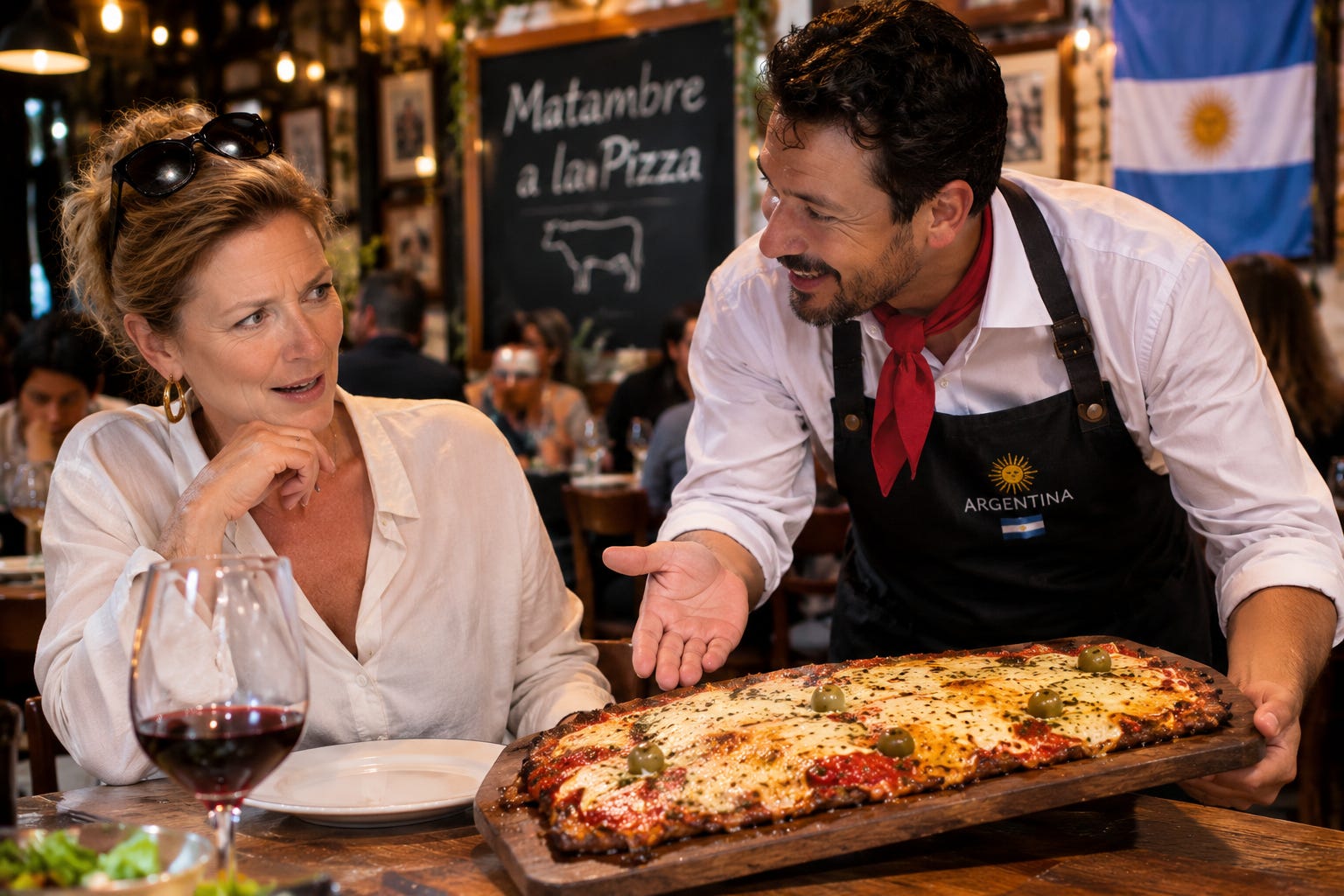
After almost two decades as a steakhouse owner, I like to flatter myself that I have seen just about everything that can be done with a piece of beef. Grilled, smoked, raw, braised, dry-aged, stuffed, sliced, or shredded. Occasionally totally confused, or abused beyond recognition too. Then along comes Argentina’s Matambre a la Pizza, taking a perfectly respectable cut of beef and turning it into something trying to pass itself off as an Italian pizza.
Yes, it’s a thing down there, and a big one too.
The name is a good place to start. Matambre is understood to derive from the Spanish matar el hambre, meaning “to kill hunger”. According to culinary folklore, this thin cut of meat was one of the first pieces cooked after an animal had been slaughtered, allowing famished gauchos to stop that annoying stomach growl. Making time for the more substantial cuts to either being saved for sale or prepared for more affluent customers.
Whether that is true hardly matters, but isn’t “Hunger Killer” just a wonderful name for a steak?
Matambre is a thin, flat sheet of meat taken from between the animal’s skin and ribs, broadly corresponding to the rose meat or fly-shaker cut in some Anglo butchery traditions. Not the sort of steak that wins beauty contests at the butcher’s counter, the muscle is relatively lean, with connective tissue that makes it chewy unless treated with skill. But Argentinians, as we all know, know plenty of beef wizardry, and plenty of practice serving it up just about any style imaginable.
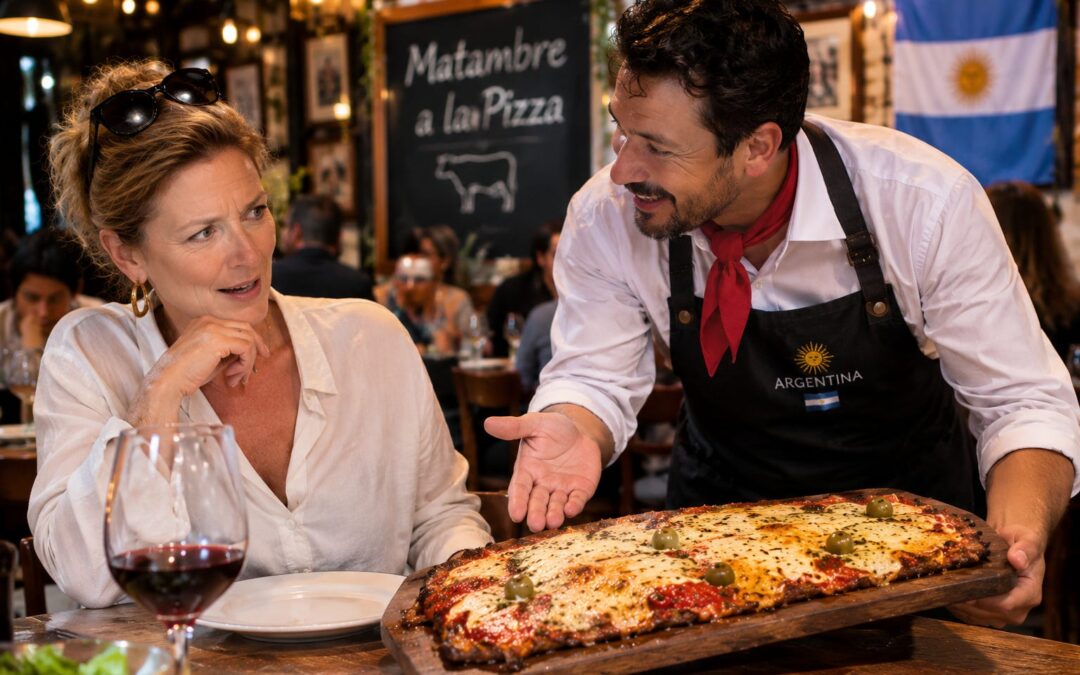
The traditional approach is to tenderise the meat through slow cooking before finishing it over a grill or in an oven. And this is where things become distinctly Italian. Also called Matambre a la Pizzaiola, the dish uses the cooked flat beef as a pizza base, covering it with tomato sauce, mozzarella, oregano and sometimes olives, peppers or slices of tomato. Back under the heat it goes until the cheese melts into a bubbling blanket.
The result looks suspiciously like a pizza, smells like a pizza, but eats like a steak.
Right now, traditionalists all over Italy are probably reaching for their blood-pressure medication, but the combination makes perfect historical sense. Argentina received millions of Italian immigrants during the late nineteenth and early twentieth centuries, and their culinary influence became deeply embedded in the national diet.
Pizza, pasta and milanesas became as familiar to Argentine families as their beloved asado or empanadas. Matambre a la Pizza is a great example of two cultures merging, except that the Italians supplied the toppings and the Argentinians insisted on keeping the cow underneath.
There is another popular version, Matambre Arrollado, in which the meat is rolled around vegetables, hard-boiled eggs and herbs – quite similar to a French roulade or Italian involtino – then cooked and sliced into colourful spirals. Often served cold, it stars at family gatherings and festive tables, particularly around Christmas.
Beyond Argentina, matambre has a following in Uruguay and other neighbouring South American countries. Argentine restaurants and expatriate communities have carried both versions to Europe, North America and elsewhere. Nevertheless, it remains unfamiliar to the international steakhouse customer, who is far more likely to recognise rib-eye, tenderloin or all-time greats like picanha.
Perhaps that is because matambre refuses to fit neatly into any category. After years of watching chefs compete over ever-higher marbling scores, ever-thicker cuts and increasingly elaborate presentations, there is something refreshing about a humble piece of beef that became a national favourite simply by borrowing an idea from another cuisine.
And if anyone complains that it’s not pizza, the answer is simple. Argentina never said it was. Because it’s matambre. Y listo!
Image Credit: https://therestaurantinsider.net (AI-generated)
_ _ _
© CHURRASCO PHUKET STEAKHOUSE / ALL RIGHTS RESERVED
Reprinting, reposting & sharing allowed, in exchange for a backlink and credits
Churrasco Phuket Steakhouse serves affordable Wagyu and Black Angus steaks and burgers. We are open daily from 12noon to 11pm at Jungceylon Shopping Center in Patong / Phuket.
We are family-friendly and offer free parking and Wi-Fi for guests. See our menus, reserve your table, find our location, and check all guest reviews here:
https://ChurrascoPhuket.com/
#Churrascophuket #jungceylon #phuketsteakhouse #affordablewagyu #wagyu
by lspeed | Oct 25, 2026 | KNOWLEDGE: MEAT ESSENTIALS
South Africa’s favourite dried meat has attitude and firm views about its American cousin
My introduction to biltong could hardly have been better staged. Years ago, on a game reserve in South Africa, we set off before sunrise and soon came across a pride of lions having breakfast. They had killed a kudu and were busy making short work of it, while we sat nearby in an open Land Rover. It was highly surreal, considering that there was nothing separating my daughter and me from a bunch of hungry lions, other than the reassurance of our guide that we were safe.
He then did something better, reaching into his bag and passing around some biltong. So there we were, watching lions munching kudu while we were nibbling on dried meat ourselves. It was one of those African Moments people like to talk about, but with the lions having gone for the fresher option. I have liked biltong ever since.
When you run a steakhouse, you develop an interest in what different countries do with beef. Argentinians throw it on fire, the French add butter, and the Americans build grills the size of small garages. South Africans, though, discovered that some good meat, salt, vinegar, spice and patience can be quite enough.
Biltong’s origins go back centuries. Indigenous people in southern Africa were preserving game with salt and air-drying it, long before Dutch settlers arrived at the Cape in the 17th century. The newcomers added vinegar and spices familiar from their Asian trade routes, particularly coriander, black pepper and cloves. Biltong emerged so successfully from that meeting of traditions that it has established itself as an enduring part of South Africa’s culinary landscape.
The name itself though is less poetic. Bil means rump or buttock, and tong means tongue or strip. A brutally practical name for a brutally practical food, and that mattered. During the Great Trek of the 19th century, Boer settlers heading inland needed protein that could travel. Biltong stepped up and solved their problems long before vacuum bags, refrigerated trucks and health-and-safety forms arrived.
Today you find it everywhere in South Africa, at butchers, petrol stations, supermarkets and rugby grounds. Beef is the standard, but there is also kudu, springbok, wildebeest and ostrich. There are thick cuts, thin shavings and dry snap sticks. Some like it dry, others want thick pieces with a softer centre and a good strip of fat. Some wine estates even offer biltong pairings, and every South African has an opinion about it.
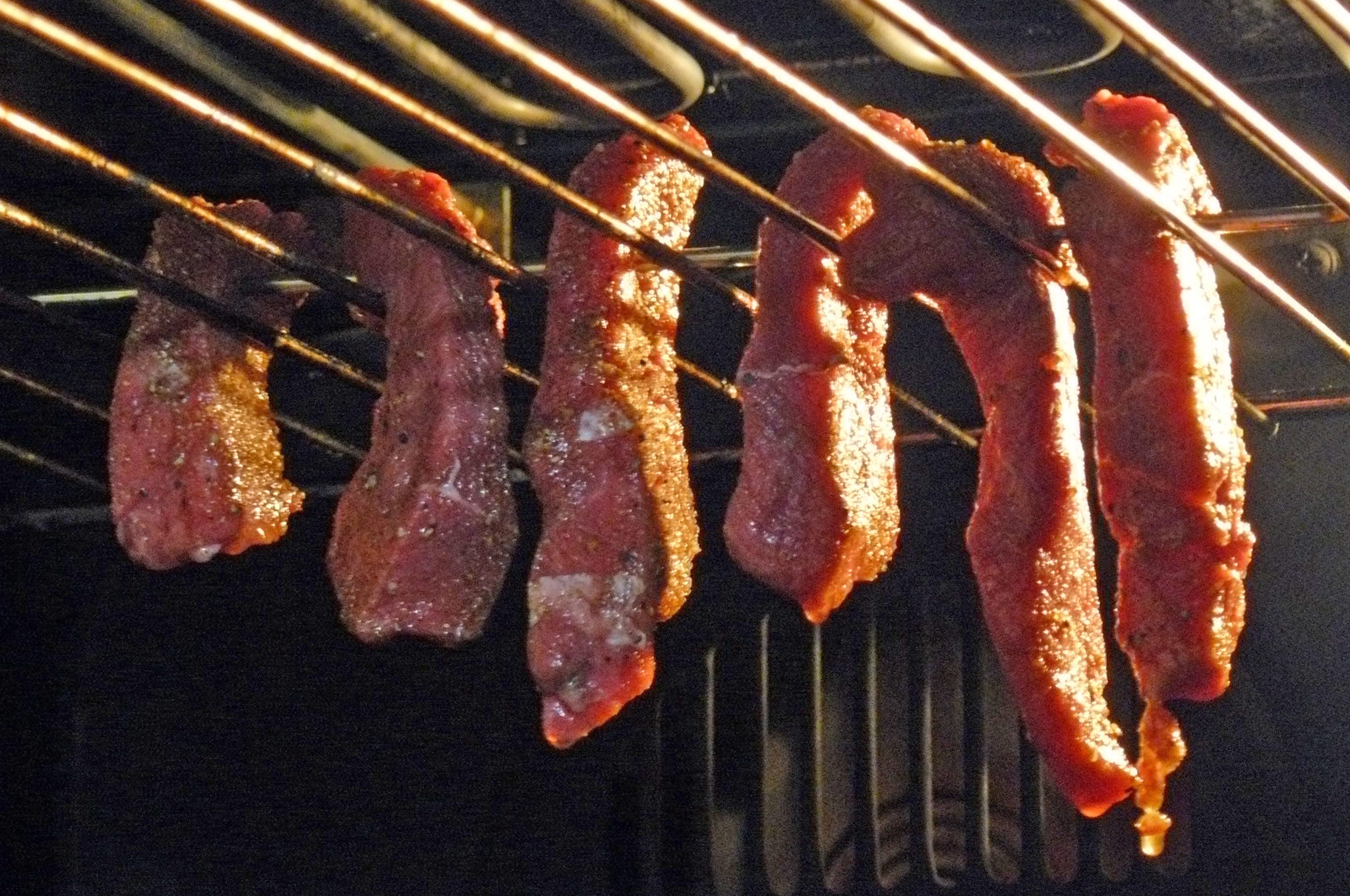
Ask three South Africans about what real biltong is and you’ll get four answers. There is, however, one subject on which consensus rules – it is not and never will be jerky. Calling biltong that is equivalent to telling an Italian that ketchup is basically tomato sauce. American jerky is generally cut thinner, often sweeter and commonly dried using heat.
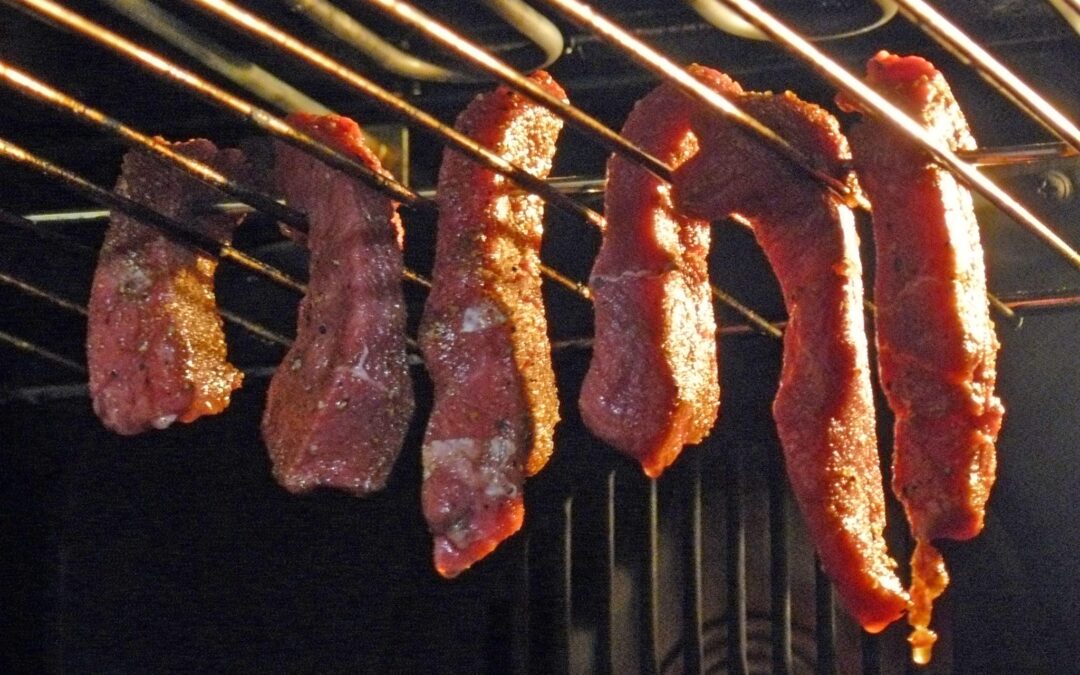
Traditional biltong is cured with vinegar, salt and spices and hung to air-dry. It takes longer, and that explains why biltong has character, while jerky often appears to have been designed for a lonely life in a glove compartment.
Biltong also crosses cultural lines in South Africa. In isiZulu it is known as umqwayiba, and regional traditions vary, with some adding fruit or local oils. Dried meat also goes into stews, adding a concentrated savoury punch. While in Cape Town, we even came across a “Creamy Biltong & Wild Mushroom Pasta” on the menu of a smart restaurant on the city’s V&A Waterfront district.
These days, Biltong is popping up in Berlin and Brooklyn, and Hong Kong and Singapore. Helped by the growing appetite for protein snacks, there is chili biltong and peri-peri biltong. And – because apparently somebody had to do it – the world now has “Exotic Truffle Fatty”, infused with black truffle oil. We will leave that last one alone.
Overall, biltong makes a lot of sense for us steak people. We all like to start with good meat, don’t mess with it too much, then give it some salt, some spice and enough time to do the rest. The lions had an even simpler breakfast recipe.
Thankfully, we didn’t end up a part of it that morning.
Image Credit: https://commons.wikimedia.org/wiki/File:BiltongUKOven.jpg
_ _ _
© CHURRASCO PHUKET STEAKHOUSE / ALL RIGHTS RESERVED
Reprinting, reposting & sharing allowed, in exchange for a backlink and credits
Churrasco Phuket Steakhouse serves affordable Wagyu and Black Angus steaks and burgers. We are open daily from 12noon to 11pm at Jungceylon Shopping Center in Patong / Phuket.
We are family-friendly and offer free parking and Wi-Fi for guests. See our menus, reserve your table, find our location, and check all guest reviews here:
https://ChurrascoPhuket.com/
#Churrascophuket #jungceylon #phuketsteakhouse #affordablewagyu #wagyu
by lspeed | Sep 27, 2026 | KNOWLEDGE: MEAT ESSENTIALS
I come from a family of hunters, and my father held two firm beliefs about it. The first was that tramping through the forest with his salvaged WWII Mauser 98k sniper rifle would make a man out of me. The second was that if you killed an animal, you ate every part of it, no excuses, no exceptions. It made rack of venison dinners at our house an ever elusive treat, while venison lung hash became the house speciality. I still get the cold shivers when I think back to those meals, with my dad making sure that my plate came back clean. Or else.
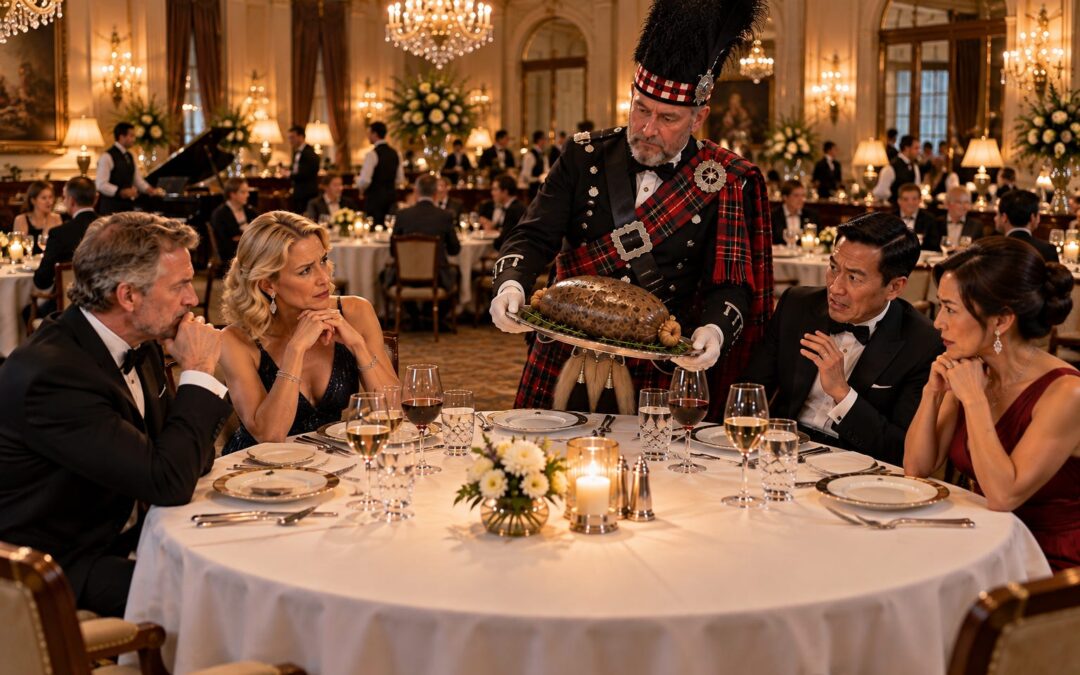
So I have sympathy for anyone who – like me – is confronted with haggis for the first time. The Scots took my father’s credo and did something he thankfully never managed – turning animal spare parts into a national icon. In my family, lungs were a test of character, whereas in Scotland they are honoured with bagpipes, a poem, and a night of the year all to themselves.
Scotland has given the world many universally liked things, like whisky, golf, penicillin, the Loch Ness monster, and Sean Connery. But when it comes to haggis, the culinary world gets quickly divided between horror and elation. The famous mixture of sheep’s heart, liver and lungs, plus oatmeal, onion, suet and spices, is traditionally packed into the animal’s stomach and simmered. When written down like this, it sounds rather less like dinner, and more like something the chef forgot to quietly dispose of.
Aficionados assure me that Haggis deserves a break, and lovingly describe it as savoury, peppery and surprisingly delicate. The oatmeal absorbs the meat juices and giving it a loose, almost crumbly texture, with the flavour being close that of a particularly good rustic stuffing. So they say.
Its origins are even murkier than its ingredients. Scotland claims haggis as its own, but cooking chopped offal with grain inside an animal’s stomach is far older than the national identity now attached to it. Similar preparations existed elsewhere, and rather awkwardly, an English manuscript from the 15th century contains a recipe for something called hagese.
Food historians are welcome to argue over ownership, but Scotland won the marketing battle centuries ago, thanks to a a food writer by the name of Robert Burns. His 1786 Address to a Haggis elevated a humble pudding into the “Great chieftain o’ the puddin’-race”. Every January 25, Burns Night gives Scots a reason to recite poetry, before cutting into their Haggis, accompanied by the sound of bagpipes.
That is considerably more ceremony than any sheep’s innards could have expected in life. It is served with Neeps and Tatties (turnip and potatoes), and not surprisingly often comes with a whisky sauce. The combination makes sense, earthy, rich and buttery, precisely the sort of food for weather in which nobody is booking a table on the terrace.
The original idea was so sound that it explains its longevity. Throwing away edible organs at slaughter was wasteful, and since offal spoils quickly, it was chopped, seasoned and cooked. Even the stomach had its job to do as a natural cooking vessel – much like sausages and their intestine casings. This was nose-to-tail eating centuries before anyone thought of opening a themed restaurant with the phrase on the menu. My father would have approved – minus the poetry probably – because food was too serious a serious matter for light entertainment.
In America, sheep lungs are banned for human consumption since 1971. The traditional recipe therefore cannot be used in its original form, and American haggis tends to arrive anatomically edited. There also are vegetarian and “gourmet” versions around, and haggis now pop up in everything from burgers to canapés. Purists will raise an eyebrow, but since haggis was born from practicality, not culinary refinement, it seems unfair to be so exclusive on its behalf.
So yes, I’ll raise a dram to this great Scottish culinary pastime. Whether I’ll ever eat it again though is between me, the bagpipes, and my dad’s ghost.
Image Credit: https://www.churrascophuket.com (AI Generated)
_ _ _
© CHURRASCO PHUKET STEAKHOUSE / ALL RIGHTS RESERVED
Reprinting, reposting & sharing allowed, in exchange for a backlink and credits
Churrasco Phuket Steakhouse serves affordable Wagyu and Black Angus steaks and burgers. We are open daily from 12noon to 11pm at Jungceylon Shopping Center in Patong / Phuket.
We are family-friendly and offer free parking and Wi-Fi for guests. See our menus, reserve your table, find our location, and check all guest reviews here:
https://ChurrascoPhuket.com/
#Churrascophuket #jungceylon #phuketsteakhouse #affordablewagyu #wagyu
by lspeed | Jun 21, 2026 | KNOWLEDGE: MEAT ESSENTIALS
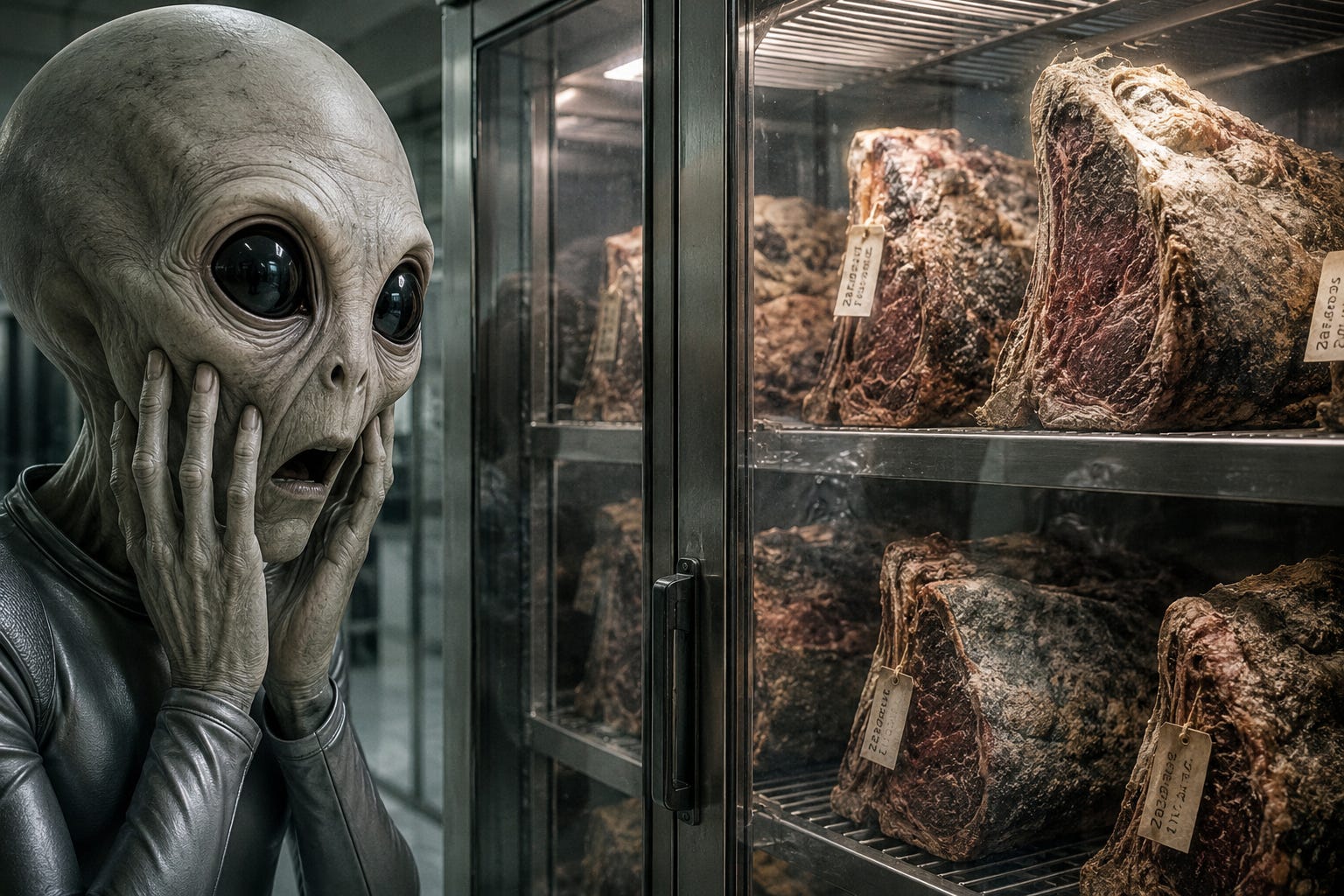
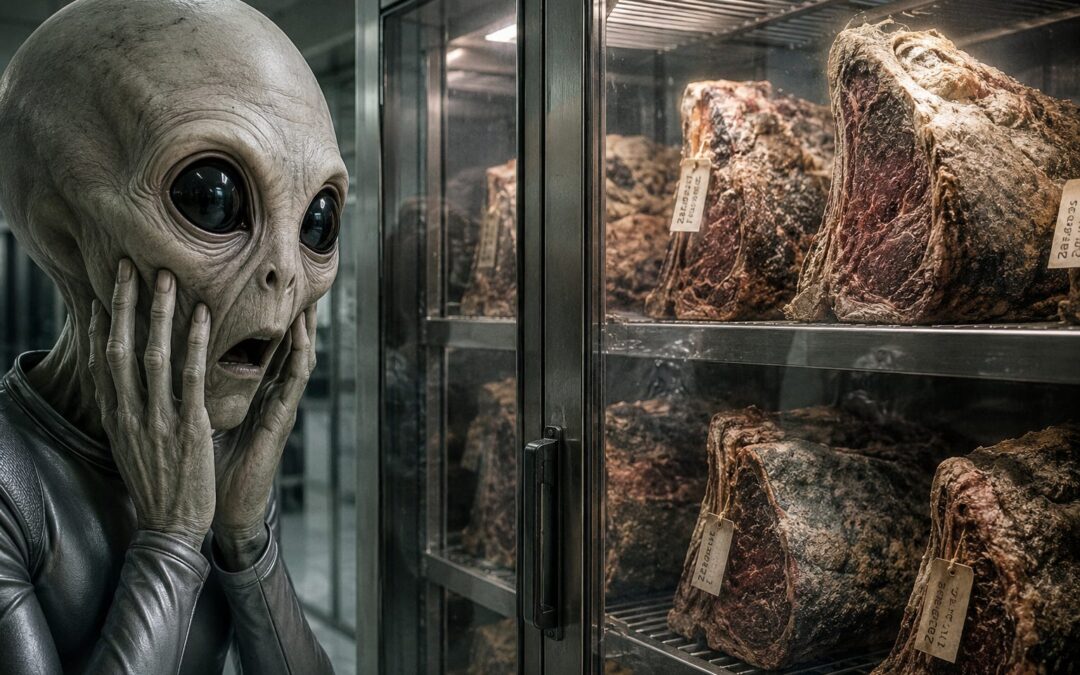
Imagine an alien landing on earth, and discovering a dry-aging chamber full of large mould-covered hunks of beef. Chances are that it would immediately turn around its space ship, hurry on back home, and report that earth’s inhabitants are a lost civilisation. Understandably so too, because to the uninitiated, dry-aged beef looks very very wrong.
Cuts of meat hang for weeks inside glass-fronted cabinets, surfaces darkened and hardened, with green and grey patches all over it. In any other context, these would be clear warning signals that something has gone horribly wrong. But in the hardcore carnivore world, aficionados celebrate this as evidence that something has gone gloriously right.
Welcome to the curious world of dry aging, a practice that is far older than most people realise. Long before vacuum sealers, refrigeration systems – or marketing departments – discovered the phrase “premium dining experience”, butchers observed that beef sometimes improved when stored under the right conditions and for extended periods. From there, the technique moved on from something headed for the trash can to becoming a “thing”.
Advocates of dry-aged beef speak about the results with enthusiasm. The flavour becomes deeper and more intense. Depending on the cut and aging period, converts describe notes of roasted nuts, butter, mushrooms, blue cheese, or even truffle. Whether those flavours sound irresistible or alarming depends largely on your personal taste, and this is where reality catches up with hype.
There is no doubt that dry aging changes beef. The process creates flavours that fresh beef does not possess. The real question is whether those differences justify the significant cost premiums of dry-aged steaks, or the potential health risks taken when eating them in the wrong place. Some diners become lifelong converts who swear by it. Others simply swear at the price, wondering why they are paying more for something that tastes funkier than the left-over steak they found in their fridge last week.
Whatever the philosophy or preference, dry aging is one of the least forgiving processes in the meat handling industry. It involves preparing and storing large cuts of beef in carefully calibrated environments for several weeks, and occasionally months. Temperature, humidity, and air circulation must be kept very precise, requiring specially trained and well supervised kitchen teams. During this controlled rotting period, naturally occurring enzymes break down muscle fibres, meant to increase tenderness, while at the same time concentrating flavour as moisture slowly evaporated. If any of these variables drift too far, spoilage and food bourne illness become real and very expensive outcomes.
The expense is further increased by simple mathematics. As beef loses moisture, it loses weight, and a dry-aged cut can lose up to 30 percent of its original mass – before it ever reaches a grill. The hardened outer layer must also be trimmed away and discarded. Less saleable meat means noticeable higher menu prices, which explains why the vast majority of the world’s beef is wet aged instead. Vacuum-sealed beef tenderises in its own juices while maintaining weight, consistency, and yield. It may show a bit less of the distinctive flavours associated with dry aging, but it remains not only recognisable, but highly effective and considerably more economical.
This is the reason why ever since our opening in January 2012, we at Churrasco Phuket have focused on always sourcing top-quality imported beef that arrives deep chilled, never frozen. From there, we wet age it further in-house, before char-grilling it to order. Convincing people to instead pay more for beef that has been dry aged may well be one of gastronomy’s latest marketing achievements.
But for a busy steakhouse like ours with guests from over 100 nationalities, priorities are consistency, reliability, and offering our guests the best possible value for money. Our stellar success has proven us right.
Image Credit: https://www.churrascophuket.com (AI Generated)
_ _ _
© CHURRASCO PHUKET STEAKHOUSE / ALL RIGHTS RESERVED
Reprinting, reposting & sharing allowed, in exchange for a backlink and credits
Churrasco Phuket Steakhouse serves affordable Wagyu and Black Angus steaks and burgers. We are open daily from 12noon to 11pm at Jungceylon Shopping Center in Patong / Phuket.
We are family-friendly and offer free parking and Wi-Fi for guests. See our menus, reserve your table, find our location, and check all guest reviews here:
https://ChurrascoPhuket.com/
#Churrascophuket #jungceylon #phuketsteakhouse #affordablewagyu #wagyu
by lspeed | May 31, 2026 | KNOWLEDGE: MEAT ESSENTIALS
The word Churrasco sounds like it should come with a drum roll. Or at least a man in a wide hat, carrying a sword-length skewer of sizzling beef. In reality, it comes from something far more practical – fire, meat, and a group of hungry cattle herders with time on their hands. The term has pre-Latin roots and is closely related to Iberian terms for scorching or burning, such as the Salamanca dialect Churrusco (”piece of burnt toast”) or Spanish Socarrar (”to scorch”). In colloquial use, it simply means barbecue for grown ups.
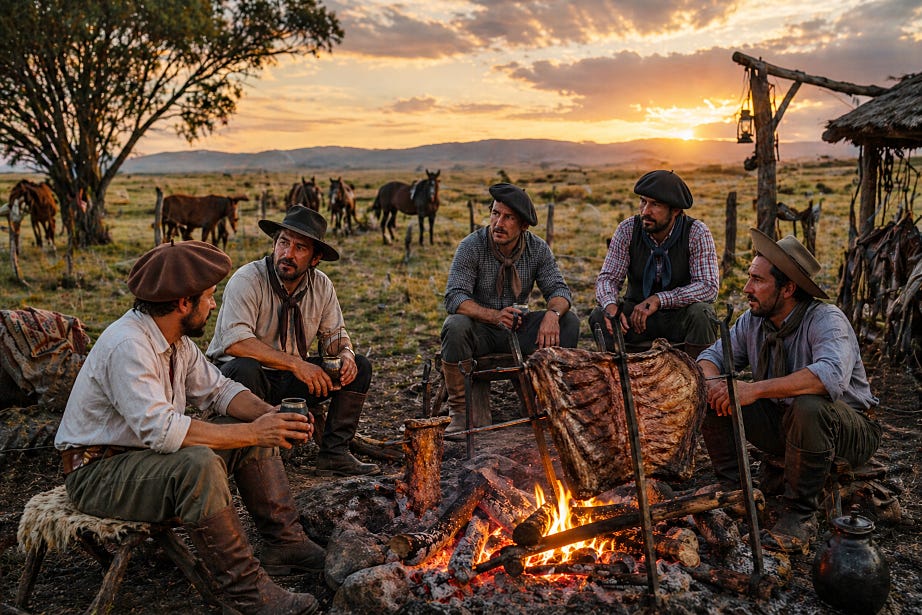
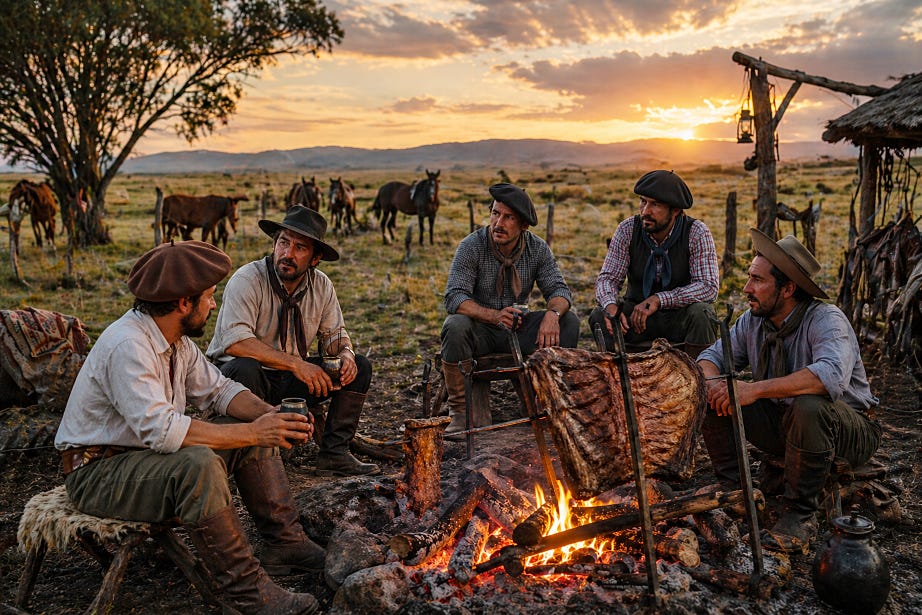
The overall Churrasco culinary tradition though traces its roots to the Gauchos of southern Brazil, Argentina, and Uruguay. These are the cowboys of the Pampas, the wide open herding spaces of the southern part of the American continent. Their job demands long days riding, herding, and occasionally deciding that lunch should involve a serious cut of beef, roasted over open flames. No complicated marinades, no delicate plating, just salt, smoke, and patience. The result is meat that tastes unapologetically like itself, which is – as culinary philosophies go – refreshingly honest.
From there, Churrasco evolved. In Brazil, it became almost ceremonial. Enter the Rodízio, an endless parade of meats carved table-side, where the only real decision is when to surrender. In Argentina and Uruguay, the spirit remained closer to the Asado grill tradition, meaning slower, more communal, and arguably more philosophical. Fire is not rushed, and neither is conversation.
Travel north, and Churrasco starts to shift shape. In parts of Latin America, it can refer to a specific cut of grilled beef, often thinner, sometimes served with rice, beans, or chimichurri. The word stretches, adapts, and politely refuses to stay boxed into a single definition. It is less a recipe and more a mindset – cook meat over fire, do it well, and do not overcomplicate things.
Which brings us to the interesting bit. What does Churrasco signal in the context of an à la carte steakhouse like ours? It means borrowing the soul, not necessarily the format. The essence of Churrasco is respect for the product and confidence in simplicity. That aligns neatly with a well-run steakhouse like ours that focuses on individual cuts, precise cooking points, and letting each steak perform on its own terms.
At the same time, the Latin influence adds a certain looseness. A sense that dining should feel lively rather than ceremonial. Sauces like chimichurri or tomato salsa step in where classic steakhouse butter might otherwise dominate. Sides lean brighter, and Latin guitar music quietly doing its part. The atmosphere softens, the edges round off, and the whole vibe lands somewhere between precision and ease.
In that sense, Churrasco is less cooking method than culinary philosophy of fire, simplicity, and a bit of swagger. How very cool is that.
Image Credit: https://www.churrascophuket.com (AI Generated)
_ _ _
© CHURRASCO PHUKET STEAKHOUSE / ALL RIGHTS RESERVED
Reprinting, reposting & sharing allowed, in exchange for a backlink and credits
Churrasco Phuket Steakhouse serves affordable Wagyu and Black Angus steaks and burgers. We are open daily from 12noon to 11pm at Jungceylon Shopping Center in Patong / Phuket.
We are family-friendly and offer free parking and Wi-Fi for guests. See our menus, reserve your table, find our location, and check all guest reviews here:
https://ChurrascoPhuket.com/
#Churrascophuket #jungceylon #phuketsteakhouse #affordablewagyu #wagyu