
We solve one of the most common kitchen wisdom confusions
After almost two decades in the steakhouse business, you better have learned that meat comes with plenty of options and opinions – especially about how it needs to be cooked. But before we head for the smoking grill, there is a common and largely misunderstood question – what exactly makes meat red or white?
You will probably say that the answer is obvious. Beef is red, chicken is white, and anything else can be decided by looking at it. Unfortunately though, nature never consulted a restaurant menu. Instead, the distinction comes down to myoglobin, an oxygen-binding protein found in muscle tissue. Animals whose muscles work hard and require substantial oxygen generally have more of it, giving their meat a darker colour.
Cattle, sheep and horses are obvious examples. Chickens, which spend more time walking than flying, have pale breast muscles but darker, more active legs. And that’s where things become really confusing, because duck and goose are poultry by definition, but their meat is darker than chicken. Ostrich and emu, both birds as well, produce deep-red meat resembling lean beef.
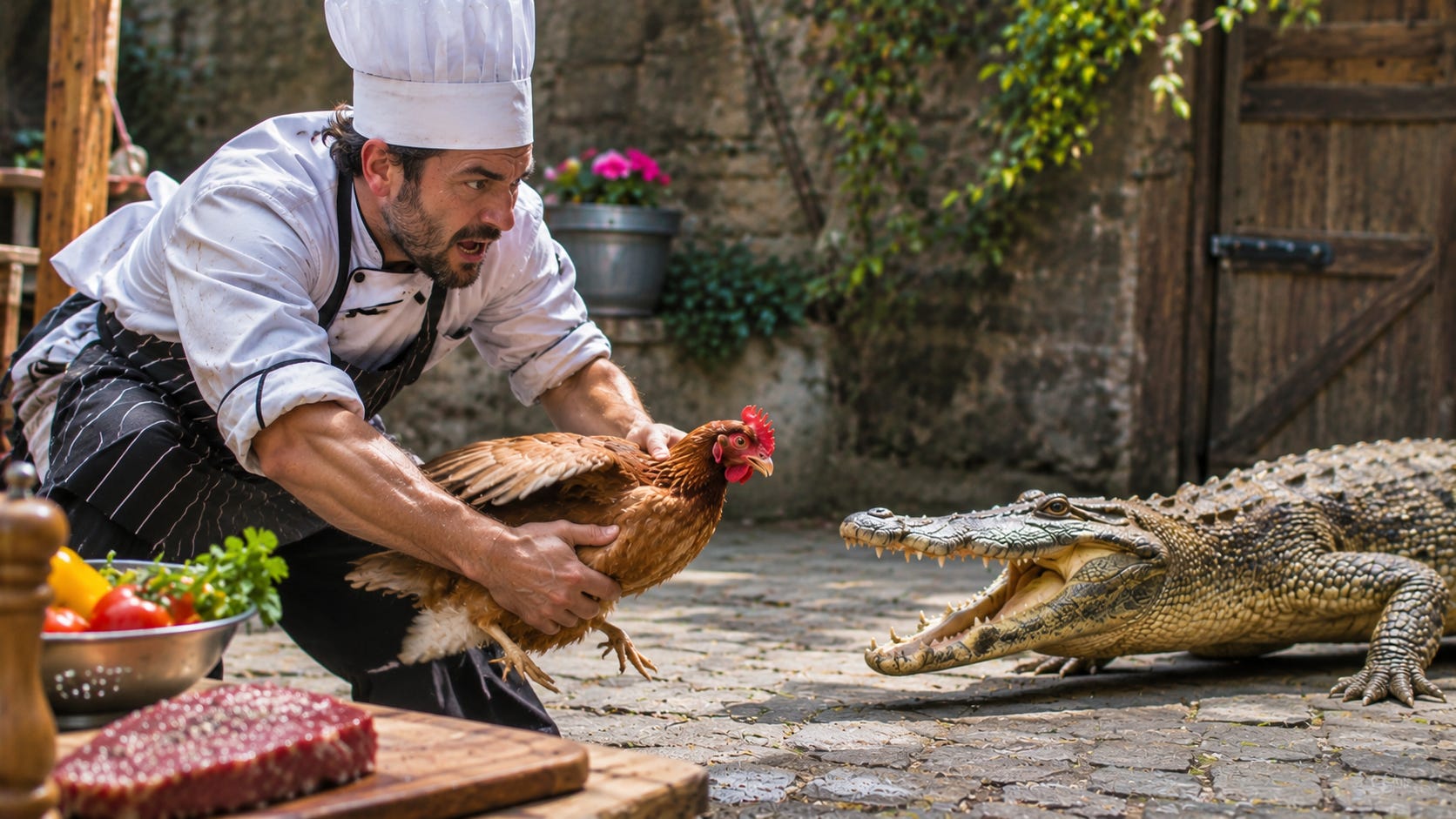
But it gets worse. Crocodile, despite looking like something that can and will eat the chef, produces pale flesh, often compared with chicken or firm fish. Then there’s rabbit, generally considered white meat. While pork – regardless of its pale appearance and decades of clever advertising – is classified as red meat nutritionally, simply because it comes from a mammal.
In the kitchen, colour is only half the story.
Chefs classify meat not merely by appearance but by muscle structure, fat content, connective tissue and how it responds to heat. A beautifully marbled rib-eye like ours benefits from intense grilling, allowing its fat to render while developing a flavourful crust. Lean venison or ostrich, on the other hand, turns dry when overcooked. Lamb shoulder needs patience and slow cooking, while lamb cutlets are perfectly happy with a few minutes over fierce heat.
Then there is everyone’s everyday chicken breast, requiring a gentler approach to retain moisture. Chicken thighs tolerate longer cooking, thanks to their greater fat and connective tissue. And crocodile tail, exceptionally lean, is best cooked briefly and carefully. As one can see, there’s no one rule to settle all questions.
Food safety introduces the other half.
Whole cuts of beef, lamb and other conventional red meats are served rare when properly handled. This is because harmful bacteria are generally concentrated on the exterior, and are therefore eliminated when exposed to enough heat. Ground meat, by definition, is different because mincing distributes surface bacteria throughout. This is why burgers require particular attention, and in our restaurant are never offered cooked less than to medium or medium well.
Poultry must be cooked thoroughly, with 74°C at the centre being a widely accepted safety target. Ground meats generally require 71°C, while whole cuts of beef, pork and lamb have a standard US safety recommendation of 63°C followed by three minutes’ resting. Wild game and exotic meats require additional caution, especially where parasites are concerned, and neither colour nor tenderness is a reliable indication of safety.
The thing to remember.
The red-versus-white debate is great brain food for nutritionists, useful knowledge for chefs, but downright confusing for customers. Even in a professional restaurant kitchen like ours, knowing the animal is merely the beginning. There is no universally agreed culinary classification for every species, particularly game birds and exotic animals. Understanding the cut, its fat, its fibres and its ideal cooking method is what separates a memorable dinner from an overpriced slab of shoe leather.
And that is the final lesson. When an emu looks like beef, a crocodile tastes like chicken, and pork insists on being the other white meat, the sensible chef leaves classifications to the academics and focusses on his training to get dinner right.
The Meat Classification Cheat Sheet
Red meats, generally classified as red nutritionally:
-
Beef, veal, buffalo, bison and yak
-
Lamb, mutton and goat
-
Pork and wild boar
-
Venison (deer, elk, moose and reindeer)
-
Horse, donkey and camel
-
Kangaroo and wallaby
-
Rabbit’s relative, the hare
White meats, conventional culinary classification:
-
Chicken, turkey and guinea fowl
-
Rabbit
-
Quail, pheasant and partridge
-
Crocodile and alligator
-
Frog legs
The interesting exceptions:
-
Duck and goose: Poultry, but distinctly dark meat
-
Ostrich and emu: Birds with deep-red, beef-like meat
-
Pigeon and squab: Poultry with dark-red flesh
-
Pork: Often pale when cooked, but nutritionally red meat
-
Rabbit and hare: Close relatives, yet traditionally placed in different culinary categories
Image Credit: https://therestaurantinsider.net (AI-generated)
_ _ _
© CHURRASCO PHUKET STEAKHOUSE / ALL RIGHTS RESERVED
Reprinting, reposting & sharing allowed, in exchange for a backlink and credits
Churrasco Phuket Steakhouse serves affordable Wagyu and Black Angus steaks and burgers. We are open daily from 12noon to 11pm at Jungceylon Shopping Center in Patong / Phuket.
We are family-friendly and offer free parking and Wi-Fi for guests. See our menus, reserve your table, find our location, and check all guest reviews here:
https://ChurrascoPhuket.com/
#Churrascophuket #jungceylon #phuketsteakhouse #affordablewagyu #wagyu